Chemical Equivalence of Different Brands of Amoxicillin Trihydrate and Its Efficacy against Bacterial Isolates
1Department of Pharmacology and Toxicology, 2Department of Microbiology, University of Veterinary and Animal Sciences, Lahore
54000, Pakistan.
3The Children’s Hospital and The Institute of Child Health, Lahore 54000, Pakistan.
*Corresponding author:
Rana Adnan AlEmail:
aqeelaadnan@gmail.comReceived: 19.Jun.2016; Accepted: 20.Jul.2016
Views 3483
Abstract
Four brands of Amoxicillin trihydrate (Alomox LA, Amovet LA, Farmox LA and Novamox LA) were processed for chemical equivalence analysis by high performance liquid chromatography (HPLC) and their minimum inhibitory concentrations (MICs) against Staphylococcus aureus and Escherichia coli by micro-dilution method. The content of amoxicillin in each brand was found acceptable by HPLC. The highest content (101.22%) was found in Farmox LA and the lowest content (90.72%) in Amovet LA. The MIC of amoxicillin against S. aureus and E. coli was 0.25µg/mL and 8µg/mL, respectively. E. coli (26.67%) and S. aureus (13.33%) had moderate resistance to amoxicillin. It was concluded that quality of all brands was acceptable and can be used for E. coli and S. aureus infections due to moderate resistance.
Keywords
Amoxicillin trihydrate, chemical equivalence, HPLC, E. coli, S. aureus and minimum inhibitory concentration.
Citation
Ali, R.A., Ashraf, M., Rasheed, M.A., Anjum, A.A., Rathore, A.W., Khan, A.B, Ali, M.A., Iqbal, A., 2016. Chemical Equivalence of Different Brands of Amoxicillin Trihydrate and Its Efficacy against Bacterial Isolates. PSM Microbiol., 01(1): 45-49.
Introduction
Amoxicillin (α-amino-hydroxy benzyl penicillin) is broad spectrum penicillin categorized under β-lactam class of antibiotics (Arroliga and Pien, 2003). It is semi synthetic antibiotic derived from a precursor molecules called 6 aminopenicillanic acid (Singh et al., 2014). Amoxicillin is bactericidal in action and interferes with cell wall synthesis in bacteria by inhibiting cross linking of peptidoglycan molecules, which is a cell wall component in gram positive (major) and gram negative bacteria (Choundikaret al., 2015). It is effective against Staphylococcus spp., Streptococcus pneumonia, Streptococcus spp, Enterococcus faecalis, Escherichia coli, Helicobacter pylori, Neisseria gonorrhoeae, Haemophilus influenza, Proteus mirabilis (Singh et al., 2014). Amoxicillin is degraded by microorganism producing β-lactamases. Several microbiological analyses indicated that amoxicillin is effective against many bacteria with MIC value ranging from 0. 06ug/mL to 4ug/mL (Kaur et al., 2011).
Amoxicillin is available as white powder of amoxicillin trihydrate with sulphorous odor. It is hygroscopic and is slightly soluble in water. It is completely dissolved in dilute acids and bases (The Official Compendia of Standards, 2007; British Pharmacopoeia, 2009). Amoxicillin having half-life of 63.1 minutes readily absorbs into different tissues of body except brain and spinal cord. It is widely used in respiratory tract, gastrointestinal tract and urinary tract infections as well as infections of skin and middle ear (Kaye et al., 2001; Cooreman et al., 1993; File TM., Jr. 2007). The efficacy of amoxicillin trihydrate may be evaluated by microbiological and calorimetric methods. However polarography, HPLC, titrimetry, fluorimetry, spectrophotometry and calorimetry are other techniques used for estimation of amoxicillin trihydrate in commercial preparations (Prakashet al., 2008). However, liquid chromatography is a method recommended by US pharmacopoeia for determining the purity of amoxicillin and analyzing amoxicillin in capsules, injections, tablets and oral suspensions (Kauret al., 2011). The present study was conducted to evaluate the chemical equivalence analysis of commercially available brands of amoxicillin and to determine their efficacy against gram positive and gram negative bacteria.
Materials and Methods
Collection of samples
Four different registered brands of amoxicillin (Alomox LA, Amovet LA, Farmox LA and Novamox LA) were collected from local market. These were transported and stored at 4oC until further analysis in Toxicology Laboratory, University of Veterinary and Animal Sciences, Lahore.
Chemical Equivalence Analysis by HPLC
Chemical equivalence of four different brands of amoxicillin trihydrate was determined by HPLC using standard amoxicillin (Rele and Mali, 2013).
Stock Solution of Amoxicillin Standard
Stock solution of Amoxicillin (Sigma- Aldrich,USA) standard (1mg/mL) was made by dissolving 100 mg of it in 100mL solution of acetonitrile and water (5:95 v/v). Stock solution was used to prepare working standard solutions of concentration 100, 50, 25, 10, 1, 0.5, 0.1 and 0.05 mg per ml by sequential dilutions in solvent solution (acetonitrile: water 5:95 v/v).
Sample Solution Preparations
Sample solutions were prepared at a concentration 50, 25 & 10 mg per ml in the similar pattern as standard solutions for each brand of Amoxicillin trihydrate and were guarded from light and stored at -20oC.
High Performance Liquid Chromatography Analysis
High Performance Liquid Chromatography (HPLC) column (25 cm × 4.6 mm) C18 was equilibrated with mobile phase disodium hydrogen phosphate (0.02M, pH 3) and acetonitrile (95:5v/v). Various concentrations of standard solutions (100 µg/ml, 50 µg/ml, 25 µg/ml, 10 µg/ml, 1 µg/ml, 0.5 µg/ml, 0.1 µg/ml and 0.05 µg/ml) were injected one by one to determine limit of detection (LOD), while the Working standard solution of various concentrations such as 50 µg/ml, 25 µg/ml &10 µg/mL were used as references. Each brand of amoxicillin trihydrate of the different concentrations (50, 25, &10 µg/ml) was evaluated against the references areas for the assay determination by the following formula (USP, 2006).
Assay % = Area of sample x Weight of Standard.x100
Area of standard x Weight of sample Absorbance was measured at l 230 nm (UV range). The analysis data of Drug was attained and processed by means of LC Solution software running under Windows XP on a Pentium 4 PC.
Microbiological Analysis
Test Bacterial Species
Isolates of E. coli and S. aureus were used to determine the efficacy of four different brands of amoxicillin. E. coli (ATCC 25922) and S. aureus (ATCC 25923) as a reference cultures were used. E. coli was cultured on Eosine Methylene Blue (EMB) agar and and S. aureus on Manitol Salt agar respectively. The bacterial identification was done by morphological characteristics, microscopic features and Biochemical profiles by using the standard protocols as per Bergey’s Manual of Determinative Bacteriology (9th edition) (John, 1984). The bacterial strains were quantified and standardized as 2×10⁶/ml in Muller Hinton broth.
Minimum Inhibitory Concentration Determination
Minimum Inhibitory Concentration Determination (MIC) values were done by micro-dilution method of standard NCCLS (National Committee for Clinical Laboratory Standards, 2006). 50 µl of the Mueller Hinton broth was put to all the wells of plate (96 well plate). Amoxicillin Trihydrate (W.S) solution was prepared and 50 µl was added to the first well. Two fold serial dilutions of the test antibiotics were made by transferring 50 µl from the first well further upto 10th well. The inoculum of the test organism standardized previously at a concentration of 2×10⁶/ml was inoculated in all the wells of 96 well plates. Then the plates were placed in an incubator for 24 hrs at 35°C. The lowermost concentration presenting inhibition of growth was measured the MIC of the organism.
Statistical Analysis
The analysis of data was done by utilizing descriptive study and then comparing the groups using T-test or ANOVA (one way analysis of variance). Linear regression was applied on the value of LOD (Steel et al., 1996).
Results
The current study was done to estimate the chemical equivalence data of various four brands of amoxicillin trihydrate (long acting injectable preparations) obtainable in the market and permitted for veterinary usage via the Ministry of Health, Govt. of the Pakistan. The current study was also done to conclude the MIC of amoxicillin trihydrate in contradiction of several bacterial isolate (Escherichia coli, Staphylococcus aureus).
Chemical Equivalence Analysis by HPLC
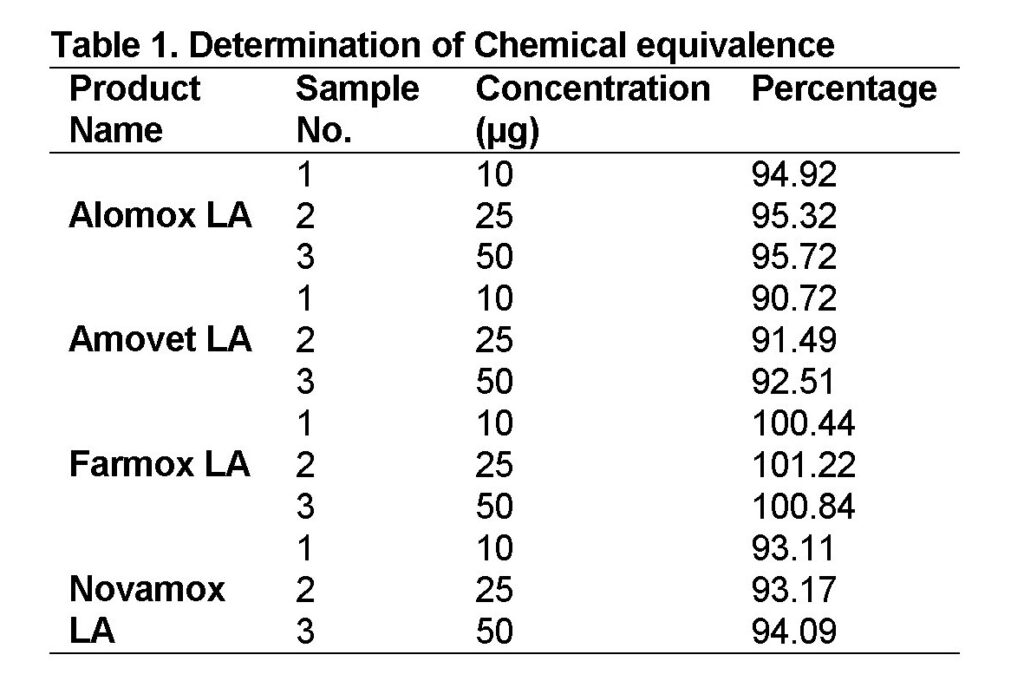
Our results showed the maximum percentage of assay of the brand Farmox LA and minimum percentage of assay of brand Amovet LA (Table 1). Comparison bar graph of these four brands presented the diverse concentrations of a brand presented just about the similar percentage assay. Result obtained by calculating the percentage assay showed that percentage assay of the brand Alomox LA was 94.92-95.72, for brand Amovet LA was 90.72-92.51, for brand Farmox LA was 100.44-101.22 and for brand Novamox LA was 93.11-94.09. The percentage increased by increasing the concentration.
Determination of Limit of Detection and Limit of Quantification
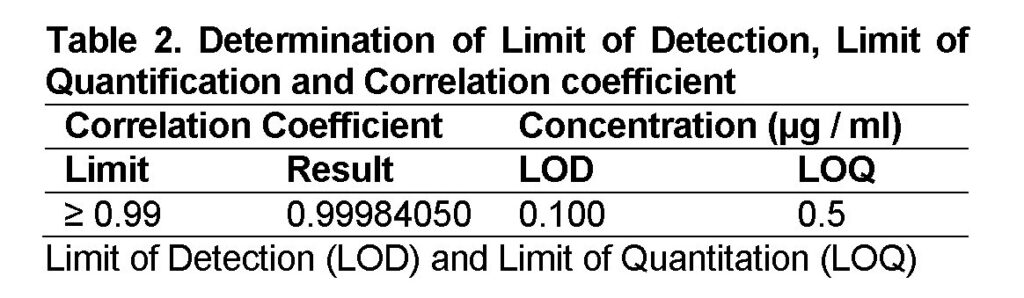
Detection limit of the HPLC was designed via diverse concentrations of the amoxicilline trihadrate. The area was decreasing by decreasing the concentration until the concentration was lessened to the 0.5(µg / ml) with no area shown by the HPLC work sheet. It presented that the LOD was 0.100 (µg / ml) and LOQ was 0.5 (µg / ml). Correlation Coefficient should be ≥ 0.99 and the result obtained by the data was 0.99984050 (Table 2).
Microbiological Analysis
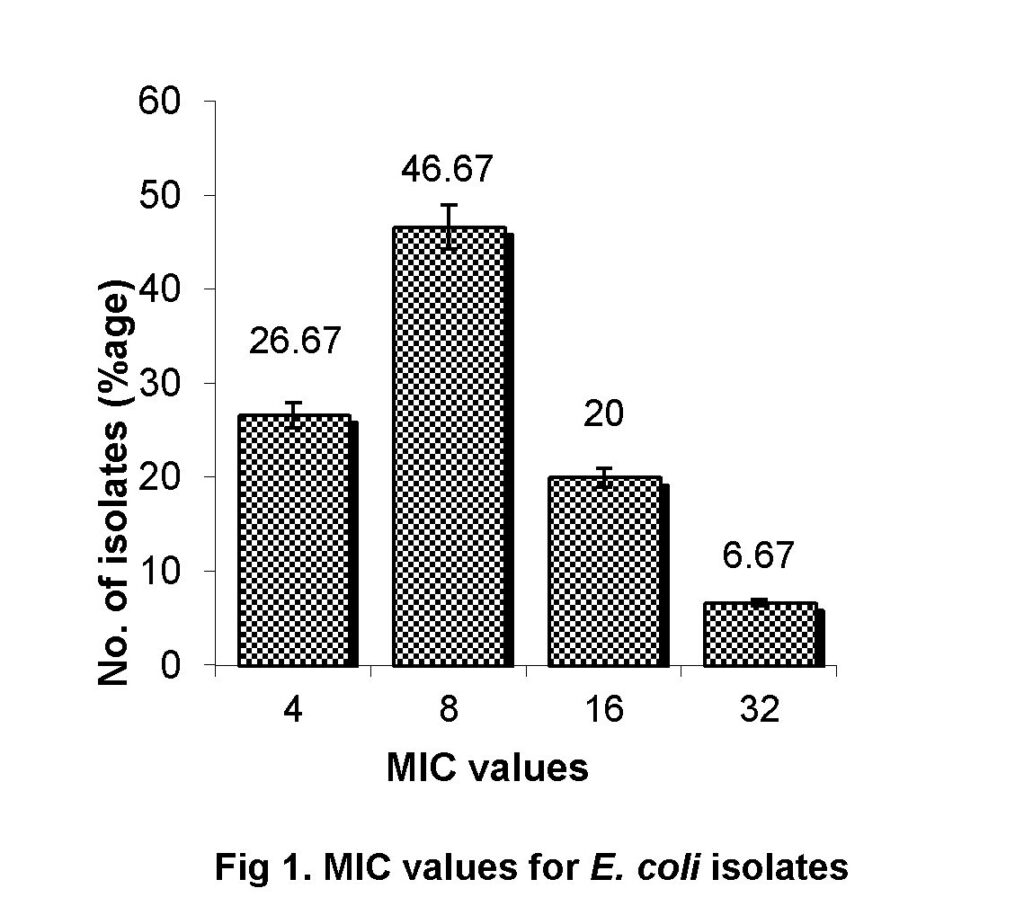
E. coli (ATCC 25922) showed MIC ≤8 µg/ml. This MIC value was used as cut off value. E. coli having MIC less than or equal to 8.0 µg/ml are considered susceptible to Amoxicillin Trihydrate (W.S) while having MIC more than 8.0 µg/ml are considered that they are resistant to the Amoxicillin Trihydrate. Thirty wells of the 96 wells plate were used to check the MIC of the Amoxicillin Trihydrate (W.S) against E. coli. Eight out of 30 had MIC 4.0 µg/ml, while 14 well had 8.0 µg/ml minimum inhibitory concentrations, six had 16.0 µg/ml and two had 32.0 µg/ml. Results showed that 26.67% had MIC 4µg / mL, 46.67% had MIC 8µg / mL, 20% had MIC 16µg / mL and 6.67% had MIC 8µg / mL (Figure 1). According to results 73.33 % are susceptible and 26.67% are resistant.
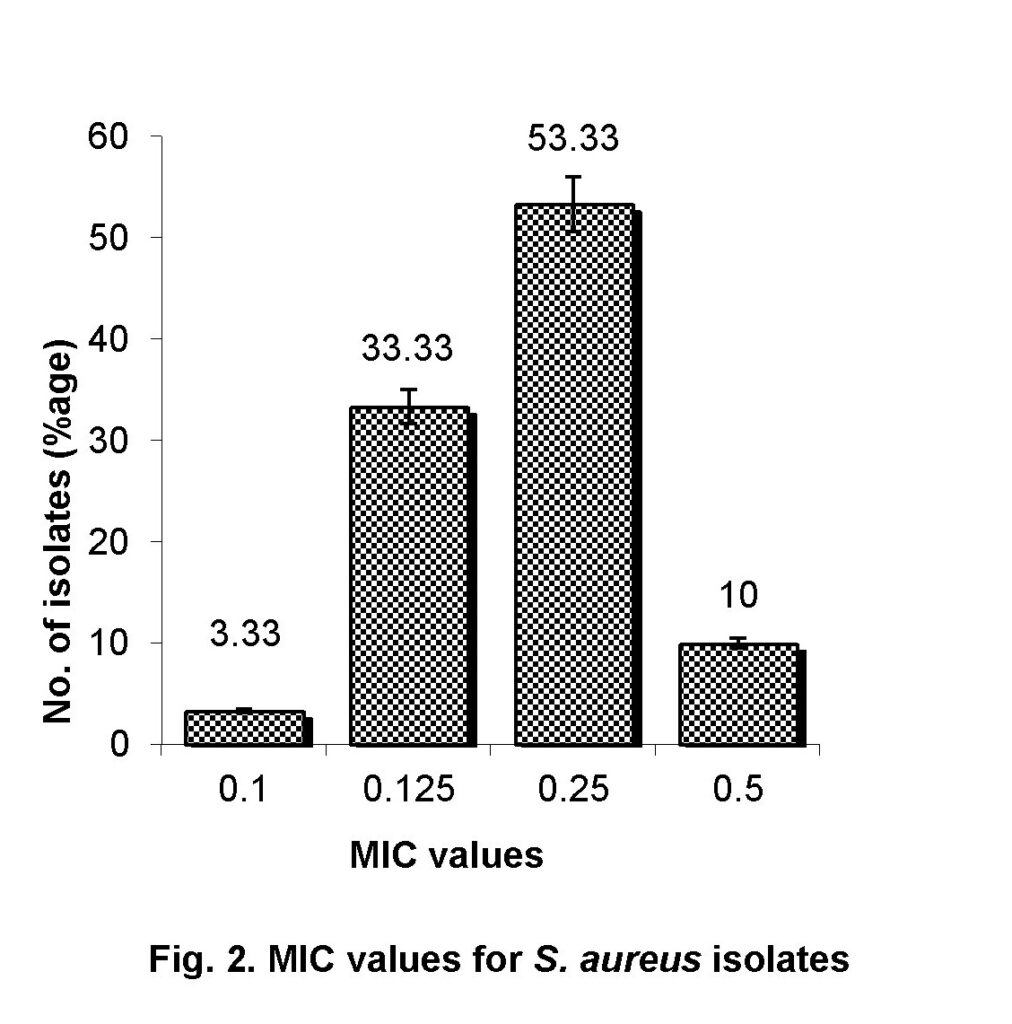
The cut off value for S. aureus (ATCC 25923) was MIC ≤0.25 µg/ml. S. aureus having less than or equal to 0.25 µg/ml minimum inhibitory concentrations are considered susceptible to Amoxicillin Trihydrate (W.S). S. aureus having MIC more than 0.25µg/ml is considered that they are resistant to the Amoxicillin Trihydrate. Thirty wells of the well plate were used to check the MIC of the Amoxicillin Trihydrate (W.S) against S.aureus. Ten out of 30 had MIC 40.125 µg/mL while the15 had MIC 0.25 µg/mL, three had 0.5 µg/mL and one had 1.0 µg/mL. Results showed that 33.33% had MIC 0.125 µg/mL, 53.33% had MIC 0.25µg / mL, 3.33% had MIC 0.1µg / mL and 10.00% had MIC 0.5µg / mL (Figure 2). According to results 86.67% are susceptible and 13.33% are resistant.
Discussion
According to results the percentage of amoxicillin increases with the increase in concentration. The percentage was highest in lowest dilution. The minimum percentage of amoxicillin obtained in this assay is 90.72 and highest is 101.22. According to British Pharmacopoeia, the acceptable value of the percentage of assay is 90-120 percent. So, four brands fall in acceptable limit. It is revealed that Farmox LA has highest content of active component. Nettyet al. (2014) conducted a study, in which he studied four samples of injectables for amoxicillin and clavulanic acid. None of four samples was considered acceptable because their contents (amoxicillin) were less than 60% and did not fall in acceptable limit. Results of this study are in contrast to present study. There are certain factors which destroy the contents of a drug including; microorganism contamination, storage condition, exposure to light, inappropriate transportation, level of moisture and storage condition. These factors reduce the drug contents.
The results in this study showed that the LOD is 0.100 µg / ml and LOQ is 0.5 µg / ml for amoxicillin. These results are against previous findings by Tavakoli et al. (2007), who determined the limit of detection (LOD) and quantification (LOQ) values as 0.05 and 0.15 μg/ml, respectively for Amoxicillin.
Multi drug resistance leftovers a foremost and developing problematic issue in therapeutic practice (Arshad et al., 2012). Our studies are in accordance with this declaration. According to results 73.33 % of E. coli isolates was susceptible and 26.67% was resistant to amoxicillin. In case of S. aureus 86.67% was susceptible and 13.33% was resistant. The mechanism of resistance is high in case of S. aureusas compared toE. coli. This resistant bacteria isolates might be able to produce β-lactamases. Beta -lactam antibiotics resistance is greatest frequently initiated by the manufacture of beta-lactamase (Guleret al., 2005). Croatian university hospital, Matanovic et al. (2010) put limitation on extraordinary practice of AMC to decrease resistance in Enterobacteriaceae, especially E. coli. As a result the significant decrease of E.coli resistance rate of 37-11% within 18 -months. Maisak et al. (2011) conducted a study to determine various antibiotics including amoxicillin against Vibrio and Streptococcus isolates. The study showed that out of 50 isolates, mostlyvibrio (gram negative bacteria) isolates were resistant to amoxicillin and MIC range was 1.0-512μg/mL, while susceptible to other antibiotics. For Streptococcus (gram positive bacteria) isolates MIC range was 0.031-0.250μg/mL. MIC values are higher in this study for gram negative bacteria (vibrio) in comparison to gram positive bacteria (Streptococcus). This supports the findings of present study in which MIC value for E. coli is 8μg/mL and for S. aureus, it is 0.25 μg/mL. Adeleke et al., 2014 demonstrated that majority of the Gram-negative isolates had higher MICs compared to Gram-positive isolates. This can be justified by the presence of certain physiological barriers in gram negative bacteria in the form of outer membranous lipids.
Conclusion
It was concluded that quality of all brands was acceptable and can be used for E. coli and S. aureus infections due to moderate resistance.
Acknowledgement
The authors acknowledge the support of Medipharm Pvt. Limited, Lahore and Licences of Bayer Pharma AG. Lahore.
Conflict of Interest
The authors declare that this article content has no conflict of interest.
References
Adeleke, O.E., Ogunniyi, O.A., Olarinde, J.D., 2014. Susceptibility of some Gram-positive and Gram-negative bacteria against some brands of amoxicillin-clavulanic acid. N.Y. Sci. J., 7(6): 80-86.
Arroliga, M.E., Pien, L., 2003. Penicillin Allergy: Consider Trying Penicillin Again. Cleve. Clin. J. Med., 70(4): 313-314. http://dx.doi.org/10.3949/ccjm.70.4.313
Arshad, H.M., Mohiudin, A.O., Azmi, B.M., 2012. Comparative in vitro antibacterial analysis of different brands of cefixime against isolates of Staphylococcus aureus and Escherichia coli. J. Appl. Pharm. Sci., 2(1): 109-113.
Bergey, S.A., 1984. Bergey, Manual of Determinative Bacteriology, 9th edition, Williams & Wilkins., Philadelphia.
British Pharmacopoeia. 2009 ed. Vol I & II. London: British. Pharmacopoeia Commission, 2009.p. 353‐367. 9.
Choundikar, M.Y., Nitave, S.A., Katageri, A.R., 2015. Calibration curve of amoxicillin trihydrate in different solvents. World J. Pharm. Pharm. Sci., 4(02): 286-293.
Cooreman, M.P., Krausgrill, P., Hengels, K.J., 1993. Local gastric and serum amoxicillin concentrations after different oral application forms. Antimicrob. Agents Chemother., 37(7): 1506-9.
File, T.M., Jr. 2007. The development of pharmacokinetically enhanced amoxicillin/clavulanate for the management of respiratory tract infections in adults. Int. J. Antimicrob. Agents., 30(Suppl 2): S131-4.
Guler, L.O.U., Gunduz, K., Gular, Y., Hadimli, H.H., 2005. Antimicrobial susceptibility and coagulase gene typing of Staphylococcus aureus isolated from bovine clinical mastitis cases in Turkey. J. Dairy Sci., 88 (9): 3149-3154.
Kaur, S.P., Rao, R., Nanda, S., 2011. Amoxicillin: A broad spectrum antibiotic. Int. J. Pharm. Pharm. Sci., 3(3): 30-37.
Kaye, C.M., Allen, A., Perry, S., McDonagh, M., Davy, M., Storm, K., Bird, N., Dewit, O., 2001. The clinical pharmacokinetics of a new pharmacokinetically enhanced formulation of amoxicillin/ clavulanate. Clin. Ther., 23: (4):578-584.
Maisak, H., Tipmongkolsilp, N., Wongtavatchai, J., 2011. Minimum inhibitory concentrations of antimicrobials against clinical Vibrio and Streptococcus isolated from aquaculture. Dis. Asian Aquac. VII., 309-316.
Matanovic, S.M., Bergman, U., Vukovic, D., Wettermark, B., Vlahovic- Palcevski, V., 2010. Impact of restricted amoxicillin/clavulanic acid use on Escherichia coli resistance – antibiotic — DU90% profiles with bacterial resistance rates: a visual presentation. Int. J. Antimicrob. Agents., 36(4): 369- 373.
NCCLS., 2006. Performance Standard for Antimicrobial Susceptibility Testing, 16th edition. Villanova, PA: NCCLS.
Nettey, H., Allotey-Babington, G. L., Debrah, P., Adi-Dako, O., Shaick, M., Kintoh, I., Arnansi, F., Nyagblordzro, M., Holison, M., 2014. The Quality and in Vitro Efficacy of Amoxicillin/Clavulanic Acid Formulations in the Central Region of Ghana. Pharmacol. Pharm., 5(1): 49-60.
Prakash, K., Raju, P.N., Kumari, K.S., Narasu, M. L., 2008. Spectrophotometric estimation of Amoxicillin trihydrate in bulk and Pharmaceutical dosage form. E-J. Chem., 5(S2): 1114-1116.
Rele, R.V., Mali, R.N., 2013. Simultaneous determination of amoxicillin trihydrate and bromhexine hydrochloride in pharmaceutical dosage by reverse phase high performance liquid chromatography Der. Pharma. Chemica., 5(1): 273-278.
Singh, M.K., Gautam, G., Mishra, A.K., Mishra, A.K., 2014. Amoxicillin Trihydrate Capsule- A choice of drug for useful for the treatment of bacterial infections. J. Biomed. Pharm. Res., 3(4): 51-53.
Steel, R.G.D., Torrie, J.H., Dinkey, D.A., 1996. Principles and Procedures of Statistics, 2nd Ed., McGraw Hill Book Co., Singapore.
Tavakoli, N., Varshosaz, J., Dorkoosh, F., Zargarzadeh, M.R., 2007.Development and validation of a simple HPLC method for simultaneous in vitro determination of amoxicillin and metronidazole at single wavelength. J. Pharm. Biomed. Anal., 43(1): 325-329.
The Official Compendia of Standards.Rockvile (US): United States Pharmacopoeial Convention; 2007. Pp: 1402‐1407.
United States Pharmacopeia (USP), 2006. Microbiological Best Laboratory Practices. USP 29 Suppl2 Pp: 3804-3807.