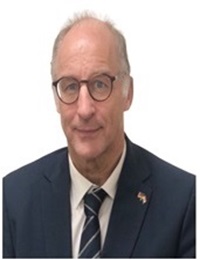
Dr. med. Christopher Röhrig has dedicated over 30 years to intensive care medicine, more than 10 years to palliative medicine, and in recent years has expanded his expertise into epigenetics, health coaching, genomics, and international healthcare studies. His career combines advanced clinical practice, leadership, teaching, and holistic approaches to patient care.
Dr. med. Christopher, a native German speaker with a medical background, is driven by a commitment to serve humanity through education. With a focus on empowering young aspirants interested in pursuing careers in healthcare, Dr. Christopher is offering complimentary classes in the German language, enriched with cultural and professional elements relevant to the field. These classes aim to provide participants with language skills and insights that will facilitate transformative opportunities in German-speaking healthcare environments. By bridging linguistic and cultural gaps, Dr. Christopher seeks to inspire and prepare the next generation for a successful future in this vital industry.
Dr. med. Christopher Röhrig has developed a strong foundation in anaesthesia through clinical practice, academic training, and applied medical expertise. His experience encompasses the following key areas:
- Clinical Practice in Anesthesia
Gained hands-on experience in administering anesthesia across various surgical procedures, ensuring patient safety and comfort throughout perioperative care. This included preoperative assessments, intraoperative monitoring, and postoperative pain management. - Patient Monitoring and Safety
Skilled in the use of advanced monitoring systems to track vital signs, oxygenation, and hemodynamic stability during anesthesia. Applied evidence-based protocols to minimize risks and manage complications effectively. - Pharmacological Expertise
In-depth knowledge of anesthetic agents, their mechanisms of action, dosage adjustments, and interactions with other medications. Applied pharmacological principles to tailor anesthesia plans to individual patient needs. - Multidisciplinary Collaboration
Worked closely with surgeons, nurses, and other healthcare professionals to coordinate anesthesia care, contributing to smooth surgical workflows and improved patient outcomes. - Emergency and Critical Care Management
Experienced in rapid response to intraoperative emergencies, including airway management, resuscitation, and stabilization of critically ill patients. - Research and Academic Engagement
Integrated insights from epigenetics and health coaching into anesthesia practice, exploring the impact of lifestyle and genetic factors on patient recovery and resilience. - Teaching and Mentorship
Shared knowledge with medical students and junior colleagues, emphasizing safe anesthesia practices, patient-centered care, and the importance of continuous learning.
This combination of clinical expertise, interdisciplinary collaboration, and academic engagement highlights Dr. Röhrig’s comprehensive experience in anesthesia activities, reflecting both technical proficiency and a holistic approach to patient care.
Intensive Care Medicine (30 Years)
Clinical Care
- Management of critically ill patients with multi-organ failure, sepsis, severe trauma, and postoperative complications.
- Advanced organ support including mechanical ventilation, extracorporeal therapies, renal replacement therapy, and circulatory support.
- Continuous haemodynamic monitoring and stabilization of unstable patients.
- Implementation of evidence-based protocols for sedation, analgesia, infection prevention, and ventilator weaning.
- Integration of palliative approaches for patients with poor prognosis in the ICU.
Procedural Expertise
- Placement of central venous and arterial catheters for monitoring and therapy.
- Performance of tracheostomies and airway management procedures.
- Use of bronchoscopy for diagnostic and therapeutic purposes.
- Ultrasound-guided interventions for vascular access and organ assessment.
Emergency and Critical Response
- Leadership of in-hospital resuscitation and rapid response teams.
- Coordination of emergency interventions for cardiac arrest, respiratory failure, and shock.
- Pre-hospital emergency medicine as a senior emergency doctor, bridging intensive care expertise into field operations.
Multidisciplinary Collaboration
- Coordination of care with surgeons, internists, neurologists, and other specialists for complex ICU patients.
- Daily interdisciplinary ward rounds to optimize patient outcomes.
- Integration of physiotherapy, nutrition, and psychosocial support into intensive care treatment plans.
Teaching and Training
- Supervision and mentoring of medical students, residents, and intensive care nurses.
- Delivery of structured training programs in intensive care procedures, monitoring, and emergency medicine.
- Contribution to continuing education for paramedics and emergency medical staff.
Research and Quality Development
- Participation in clinical research projects related to intensive care medicine and anaesthesiology.
- Development and implementation of quality management systems in intensive care units.
- Monitoring and improvement of patient safety standards, infection control, and treatment outcomes.
Leadership Roles
- Senior Physician at Marienhospital Steinfurt, responsible for intensive care services.
- Senior Consultant at Klinikum Hochsauerland (2008–2022), leading intensive care medicine alongside anaesthesia, pain therapy, and palliative medicine.
- Oversight of ICU staff, resource management, and strategic development of intensive care services.
Palliative Medicine (30 Years)
Clinical Care
- Comprehensive management of patients with advanced, life-limiting illnesses.
- Symptom control for pain, dyspnoea, nausea, anxiety, and other distressing conditions.
- Integration of palliative care into hospital settings, including ICU and surgical wards.
- Support for patients and families in decision-making regarding treatment goals and end-of-life care.
Multidisciplinary Collaboration
- Coordination with oncology, internal medicine, geriatrics, and intensive care teams to provide holistic care.
- Collaboration with psychologists, social workers, chaplains, and nursing staff to address physical, emotional, and spiritual needs.
- Participation in ethics consultations for complex treatment decisions.
Teaching and Training
- Education of medical students, residents, and nursing staff in principles of palliative medicine.
- Training in communication skills for breaking bad news, discussing prognosis, and advance care planning.
- Development of workshops and seminars on palliative care integration in acute hospital settings.
Program Development
- Establishment and expansion of palliative care services within Klinikum Hochsauerland.
- Implementation of standardized protocols for palliative symptom management.
- Development of pathways for early integration of palliative care in chronic and terminal illnesses.
Leadership and Advocacy
- Promotion of palliative medicine as an essential component of comprehensive patient care.
- Contribution to hospital-wide strategies for improving quality of life in patients with advanced disease.
- Advocacy for patient dignity, autonomy, and compassionate care at the end of life.
Epigenetics and Health Coaching (2 Years)
Epigenetics Studies
- Exploration of the role of epigenetic mechanisms in health, disease prevention, and personalized medicine.
- Study of lifestyle-related influences on gene expression, including nutrition, stress, physical activity, and environmental factors.
- Application of epigenetic knowledge to preventive medicine and long-term health strategies.
Health Coaching
- Training in holistic health coaching with a focus on lifestyle medicine and patient empowerment.
- Guidance for individuals in adopting sustainable lifestyle changes to improve physical and mental well-being.
- Integration of nutrition, exercise, stress management, and sleep optimization into personalized health plans.
- Support for patients in chronic disease management through motivational strategies and behavioral change techniques.
Interdisciplinary Integration
- Bridging conventional medicine with preventive and lifestyle-based approaches.
- Collaboration with nutritionists, physiotherapists, and psychologists to provide comprehensive health coaching.
- Development of patient-centered programs combining medical expertise with coaching strategies for long-term health improvement.
Genomics for Quality of Life (2 Years)
Clinical Application
- Study and application of genomic insights to improve patient quality of life and preventive health strategies.
- Use of genomic profiling to identify predispositions to chronic diseases and guide personalized interventions.
- Integration of genomics into lifestyle medicine, focusing on nutrition, exercise, and stress management tailored to genetic profiles.
Research and Development
- Exploration of gene-environment interactions and their impact on health outcomes.
- Application of genomic data to optimize treatment strategies in pain therapy, palliative care, and preventive medicine.
- Development of individualized care models based on genetic and epigenetic markers.
Patient-Centered Care
- Counseling patients on the role of genomics in health and disease prevention.
- Empowering individuals to make informed lifestyle choices aligned with their genetic predispositions.
- Supporting long-term health and resilience through personalized genomic-based strategies.
Interdisciplinary Collaboration
- Collaboration with geneticists, molecular biologists, and lifestyle medicine experts to integrate genomics into clinical practice.
- Participation in multidisciplinary projects linking genomics, epigenetics, and health coaching for holistic patient care.
- Contribution to the development of innovative approaches that combine medical expertise with genomic science to enhance quality of life.
Global Healthcare Studies – India (Field Research on Skilled Labor Strategies)
Research Focus
- Travel to India to study healthcare systems and workforce strategies.
- Examination of skilled labor distribution among healthcare professionals in urban and rural settings.
- Analysis of training models, task-shifting practices, and workforce optimization in resource-limited environments.
Observational Activities
- Engagement with hospitals, clinics, and community health centers to understand healthcare delivery models.
- Observation of interdisciplinary collaboration between physicians, nurses, and allied health professionals.
- Study of innovative approaches to maximize efficiency and patient care with limited resources.
Knowledge Transfer
- Comparative analysis of healthcare workforce strategies between India and Germany.
- Identification of best practices in skill utilization and workforce training applicable to European healthcare systems.
- Integration of insights into medical education, health coaching, and quality management.
Broader Impact
- Contribution to global health perspectives by linking intensive care, palliative medicine, and preventive strategies with international workforce models.
- Advocacy for sustainable healthcare systems through optimized use of skilled labor.
- Development of concepts for improving patient care and quality of life by learning from diverse healthcare environments.
Educational and Cultural Program – Way to Deutschland
Program Vision
- Initiated the program Way to Deutschland inspired by Mahatma Gandhi’s saying: “Be the change you want to see.”
- Designed to support Indian students seeking better opportunities in Germany through language and cultural preparation.
Program Activities
- Honorary training in German language with integration of cultural, historical, and social elements.
- Delivery of both online and offline courses tailored to the needs of Indian students.
- Development of interactive modules combining language learning with practical insights into German society and professional life.
Impact
- Empowering students to adapt successfully to academic and professional environments in Germany.
- Bridging cultural understanding between India and Germany through education.
- Supporting international mobility and career development by equipping students with linguistic and cultural competence.
Through two decades in intensive care, a decade in palliative medicine, and recent specialization in epigenetics, health coaching, genomics, global healthcare studies, and educational initiatives, Dr. Röhrig has built a career that unites high-level clinical expertise with holistic, preventive, and internationally informed approaches to patient care and education.
Summary of Palliative Care Experience
Palliative care focuses on improving the quality of life for patients with serious, life-limiting illnesses by addressing physical, emotional, social, and spiritual needs. The experience of palliative care is shaped by a holistic, patient-centered approach that extends support to both patients and their families.
Key Aspects of the Experience
- Symptom Management: Relief from pain, breathlessness, fatigue, nausea, and other distressing symptoms is central to the care process. Patients often report improved comfort and dignity.
- Emotional and Psychological Support: Counseling, active listening, and compassionate communication help patients and families cope with fear, anxiety, and grief.
- Family Involvement: Families are included in decision-making, care planning, and emotional support, fostering a sense of shared responsibility and understanding.
- Holistic Approach: Beyond medical treatment, palliative care addresses spiritual concerns, cultural values, and personal wishes, ensuring care aligns with the patient’s identity and beliefs.
- Interdisciplinary Teamwork: Physicians, nurses, social workers, psychologists, and chaplains collaborate to provide comprehensive care tailored to individual needs.
- End-of-Life Support: Patients and families are guided through advanced care planning, ethical decisions, and preparation for the final stages of life with dignity and respect.
Impact on Patients and Families
- Enhanced quality of life despite illness progression
- Reduced hospitalizations and invasive interventions
- Greater sense of control and autonomy in care decisions
- Emotional resilience and improved coping mechanisms
- Supportive environment for grieving and bereavement
Overall Experience
Palliative care is experienced as a compassionate, person-centered journey that prioritizes comfort, dignity, and meaning. It transforms the experience of serious illness from one of isolation and suffering into one of support, connection, and holistic well-being.
Dr. med. Christopher Röhrig has joined the editorial board of the International Journal of New Medicine.
Röhrig Institut: Link