A Comprehensive Review of Biogas Sector for Electric Power Generation in Pakistan
1COMSATS Institute of Information Technology, Abbottabad 22060, Pakistan.
2King Fahad University of Petroleum and Minerals, Dhahran, 31261 Saudi Arabia.
3The School of Life Sciences, Fujian Agriculture and Forestry University, Fuzhou 350002, China.
4Pakistan Science Mission (PSM), Noor Kot 51770, Pakistan.
*Corresponding author:
Neelofar Shaukat;Email:
neelofar169@gmail.comViews 3787
Abstract
This review study is directed towards the establishment of commercial biogas sector for electric power generation in Pakistan. Pakistan is facing severe electric power crisis because of huge mismatch between supply and demand of electric power generation. Major issues lies at generation side as a consequence of poor infrastructure, depleting nature of conventional fuel resources. Keeping in view the Pakistan’s agriculture base and environmental concerns we focus on biogas sector for electric power generation. The marked increase of 3.7% is observed in livestock sector of Pakistan according to economic survey of Pakistan 2012-2013. The aforementioned increase of livestock sector results in 1140 million dung production. Therefore, due to environmental concerns and energy crisis of Pakistan we need to utilize all waste and manure from livestock sector in an efficient way. The transformation process of manure and waste in to methane gas is called Biogas .This methane gas can be utilized as a fuel for domestic and industrial purpose. Therefore, biogas will act as an alternative, sustainable and renewable energy resource. We focus on KPK province for visiting the installed biogas plants and then further analysis the data provided by PCRET (Pakistan Council of Renewable energies technologies) for whole country. The aforementioned analysis clearly illustrated that there is a pronounced potential for commercial biogas sector for mitigating energy crisis in Pakistan.
Keywords
Greenhouse gas, Carbon dioxide, Pakistan Council of Renewable Energies Technologies, Energy crises, Biogas, Live Stock.
Citation
Shaukat, N., Khan, B., Khan, T., Younis, M.N., Faris, N., Javed, A., Iqbal, M.N., 2016. A Comprehensive Review of Biogas Sector for Electric Power Generation in Pakistan. PSM Biol. Res., 01(1): 43-48.
Introduction
Pakistan’s energy crisis is growing to the rate of 13% annually. Where the energy requirement is estimated to reach 179 Million TOEs (Tonne of Oil Equivalent) by year 2020, currently it is 79 Million TOEs, which was 57.9 Million TOEs in 2006.The Country is facing a severe electricity shortfall of 8500 Mega Watt, which results in load shedding of 8-21 hours during summers. This shortfall leads to under production in industries, which in turns badly affects the export and economy (Ministry of Planning, Development and Reforms Pakistan, 2015: Pakistan Economic Survey 2012-13). This energy crisis is due to mismatch between supply and demand of energy. The major issue lies at supply side, for which we need to explore more alternatives in order to mitigate the energy crisis. There is a lot of potential for renewable energy resources in Pakistan like solar, wind, biomass, and coal due to its geographical location. Besides the availability of these renewable energies, the short fall of conventional sources is also an indication for us all to explore more alternate and renewable energy resources, in order to revive the economic growth (Ministry of Planning, Development and Reforms Pakistan, 2015: Pakistan Economic Survey 2012-13).
Renewable energy technologies include solar, wind, biomass etc. Among all these renewable energies we will mainly focus on biogas in this study. The agricultural sector in Pakistan acts like the backbone in economic growth, contributing over 22% to GDP (Pakistan Economic Survey 2012-13). The livestock sector also shows a marked increase of 3.7%, according to economic survey of Pakistan 2012-2013 and contributes 56% to the agricultural sector and 12% to GDP (Pakistan Economic Survey 2012-13). The country having 72 Millions of livestock animals, producing over 1140 Million TOEs dung and urine of 338 Million TOEs (Pakistan Economic Survey 2012-13). So there is a potential for establishing a commercial biogas sector, where the biogas generating capacity is estimated to be 8.85×10¹⁰ m3 from 1287 Million TOEs cattle dung. The equivalent heat amount of this is 1.8×10¹² Millions Joules. This also leads to a production of 350 Million TOEs manure (Mittal, 1996) which may be used as fertilizers. The currently installed biogas plants, however, mainly used for domestic purposes (Ilyas, 2006).
In this study our main objective was to review the installed biogas plants across Pakistan and to analyse their socio-economic and environmental impact.
Biogas history in Pakistan
Biogas generation started a few decades ago. In 1974, the government of Pakistan starts a scheme, comprising of three phases, and installed 4137 plants by the year 1987 across the country. These were drum type floating biogas plants with capacity of 5-15 m3 gas production per day. This scheme was successful during the first two phases, but failed all together as the government stopped financial support. PCRET is the leading centre in the country for installation of biogas units. Besides PCRET, Initiative for Rural and Sustainable Development (IRSD), an NGO (Non-Government Organization) with the support of UNDP (United Nations Development Program) installed 1500 biogas plants. There is another NGO “Koshish”, which in Sialkot Punjab installed 200 plants, in collaboration with NGO Green Circle (Ghimire, 2007).
Recently installed biogas plants are of small size as compared to 1970-1980’s plants. 12 fixed dome GGC 2047 of 6 m3 “Nepalase design” installed in “Pasrur” tehsil of Sialkot by Punjab Rural Support Program (PRSP) and 4 plants of the same design are installed in Dhera Ismail Khan in collaboration with the Foundation for Integrated Development Actions (FIDA) (Ghimire, 2007). Currently PRCET is the leader in the installation of these plants across the country. The details of which can be found later in this paper.
Research methodology and study tool
The study tool and research methodology followed by our team were mainly in line with the objective of the study. We collected both primary and secondary data, interactive approach was used; structured questionnaires, and open minded unstructured interviews were commenced, followed by observation of cattle shades and slurry pits. A detailed survey of biogas plants was done in KPK (Khyber Pakhtunkhwa) Province. Overall, 18 samples were visited and information was collected. The collected information contains the Operational years. Four plants were visited in Peshawar and their average operational period is seven years. Three plants were visited in charsada having five average operational years. So as Harichand, Kohat Road, Nazir Bagh and Surezai with their operational years of five, one, three and two respectively. The data then verified and analysed using MS EXCEL and MS Word and then being incorporated in Figure 1.
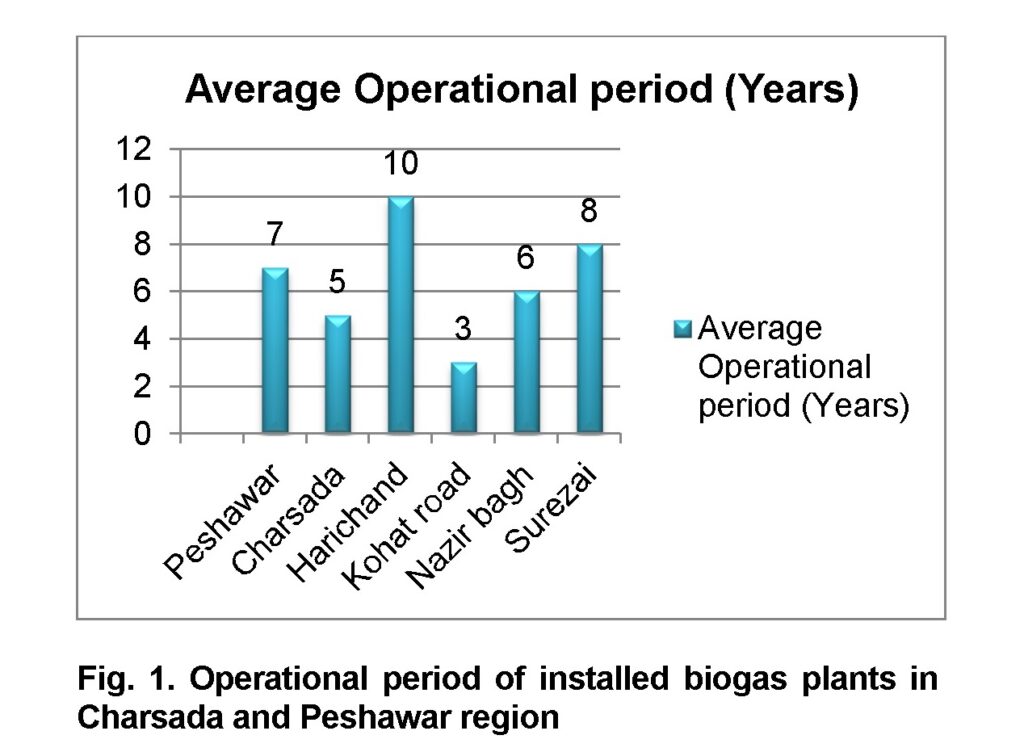
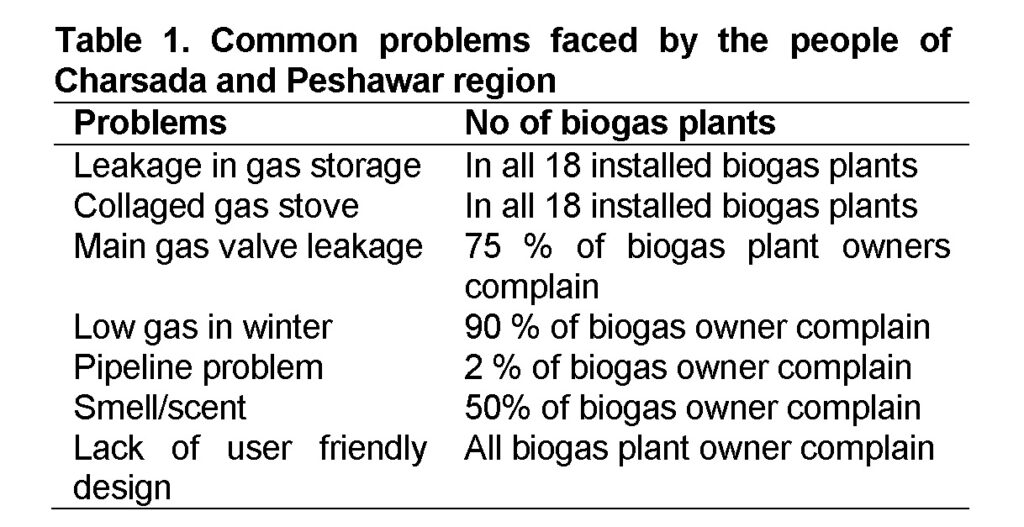
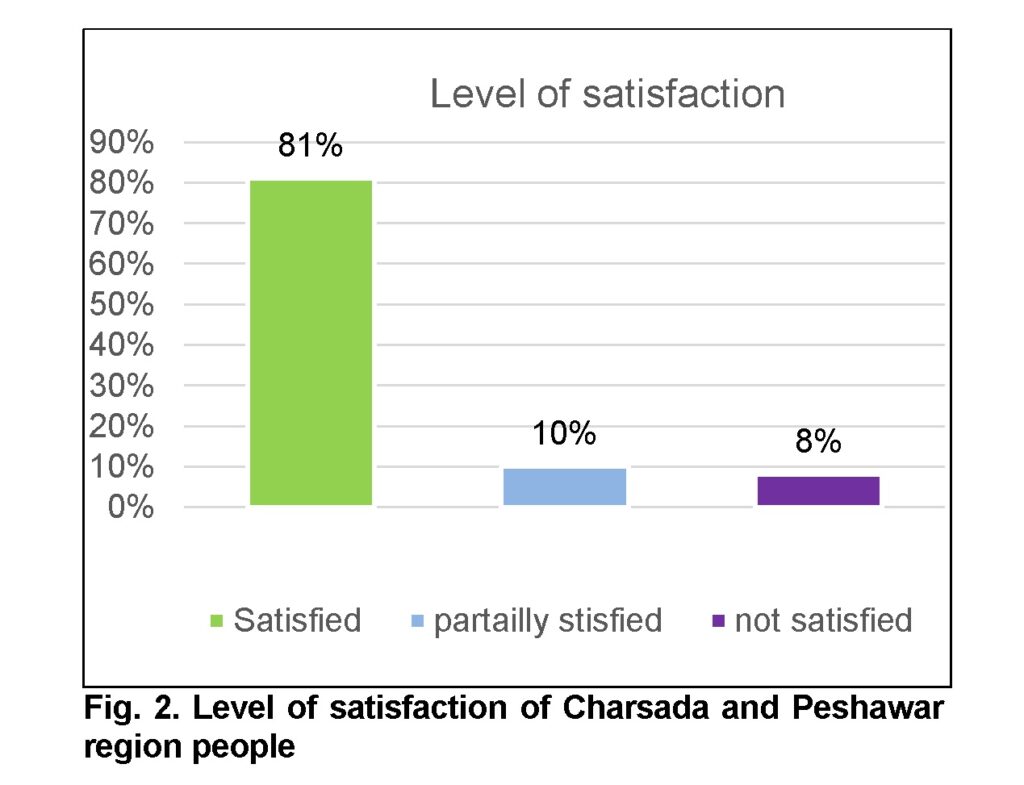
In charsada and Peshawar region 18 biogas plants were analysed. The level of satisfaction of people (Figure 2) and the common problems faced by biogas users are presented (Table 1).
Environmental and economic impact of biogas
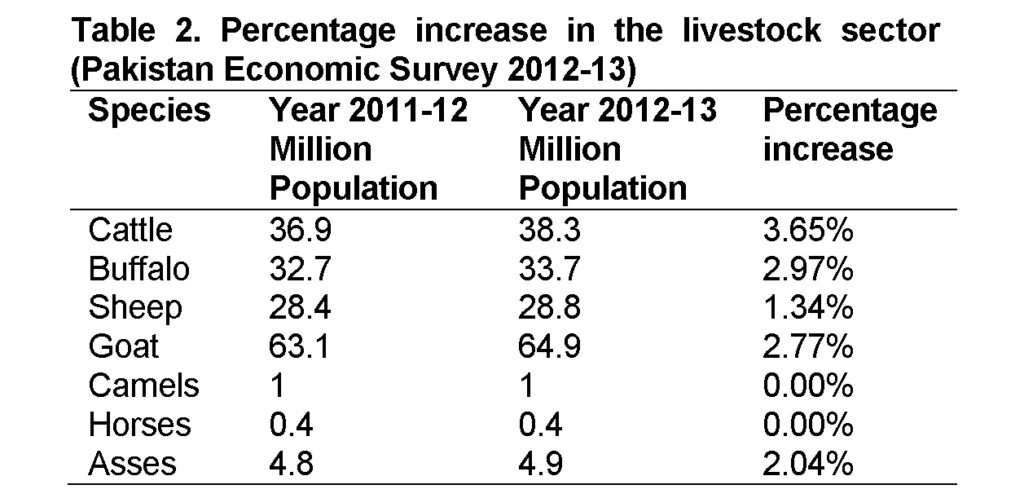
The average increase in livestock from 2011 to 2013 is shown (Table 2). Cattles increased from 3.6 million to 38.3 million with a percentage increase of 3.65% in just two years. The buffalos were 32.7 million according to 2011-12 survey and increased to 33.7 million in 2012-2013 that shows percentage increase of 2.97%. Percentages for sheep, goats and asses also increased in these years, but the number of camels and horses remained same. Livestock provides sources of income for 45 percent of countries labor force and 60% of rural population contributing 11.6% to national grass domestic product (GDP) and 55% to agriculture GDP (Economic Survey of Pakistan, 2012; Iqbal et al., 2013; Iqbal et al., 2014; Muhammad et al., 2015). Livestock is contributing to the economy of Pakistan but the challenge faced by livestock is various gastrointestinal diseases (Iqbal et al., 2014). This large number of livestock with constantly increasing percentage every year produces an enormous amount of dunk. This dunk could be the cheapest raw material for a Biogas plant. Production of biogas from such a cheap and largely available raw material makes biogas a cheaper source of energy.
Currently, the decomposition of all the waste from livestock is done outdoor, which leads to diseases and air pollution, besides greenhouse gas emission. Doorn et al. (2002) demonstrated that the chemical composition of these gases have ammonia, hydrogen, sulphuric fluoride and other poisonous gases, which are the major causes of serious health problems. The ammonia gas also causes a contamination of the ground water (The US Inventory of Greenhouse Gas Emissions and Sinks, 2006). IPCC (Intergovernmental Panel on Climate Change) shows that methane gas contributes 21% more as compared to carbon dioxide, and Nitrous oxide 310 times more in global warming over the time span of 100 years (EPA, 2005). These environmental issues are the indicators of decomposing all waste in an efficient manner. The biogas is a process of conversion of manure to methane gas (Lantz et al., 2007; Angelidaki and Ellegaard, 2003) via anaerobic digestion. The outcome of this process can be utilized as a fertilizer (Balsam, 2006). The gas is also odourless (Van Dyne and Weber, 1994) and can be even utilized for the power generation and as CNG (compressed natural gas) by scrubbing process (Mandeno et al., 2005; Krich et al., 2005). So biogas is a best alternative for waste management (Van Dyne and Weber, 1994; Robert et al., 2005; Berglund and Borjesson, 2006).
Biogas can also be used as a substitute for coal in power generation industry. Thus biogas plays a vital role in reducing carbon dioxide Emission to the environment as this gas is the main cause of global warming (Centre for Climate and Energy Solutions, 2000). The composition of dried dung is same as wood, but its efficiency can be increased to 60% with the help of anaerobic digestion, and waste can be used as fertilizer (Ramachandra et al., 2004). Country’s 67% population living in rural areas, and utilizing for cooking and heat either dung cake or fire wood (Pakistan Economic Survey 2005-06), leading to a serious threat to the forestry area. The Forest depletion is one of the most serious environmental issues for Pakistan. According to an estimate 39 thousand hectares of forests are vanishing annually. Study by WEC (World Environment centre) (World Energy Council, 2001) shows that Pakistan has only 3.2% the forest area of its total area, while 39% contribution of the primary energy is by wood. The dung produced has a capacity to fulfil the energy demand of 28 Million peoples by 12 Million m3 gas per day and 21 Million tons of fertilizers (Akhter, 2004). So, biogas has its positive impact on the environment .It may be a valuable commercial sector, creating new employment opportunities. As there is a marked increase in livestock sector each year, so the potential for commercial biogas sector is also increasing. This implementation of commercial biogas sector will have many positive impacts on forestry growth as the biogas contribution in energy demand will be in organised fashion, thus reducing the wood burn. PCRET is responsible for Research and Development of biogas in Pakistan. Pakistan has nearly 8,000 biogas plants with a total 4.24 billion cubic feet (per year) production of natural gas, while demand varies between 6 to 6.75 billion cubic feet (Thomson Reuters Foundation, 2013).
The produced biogas may be used to replace Liquid Petroleum Gas (LPG), Kerosene oil and wood. A single 5m3 biogas plant would produce gas equivalent to 64kg of LPG every month, 93 liters of Kerosene Oil and 800 Kg of wood. PCRET Installed 5m3 sized 4109 biogas plants all over the country. Using biogas instead of LPG may save 52 Million Rupees each year. While as a substitute for kerosene oil, may save approximately 50 Million Rupees every year. Considering wood, using biogas in replacement of wood may save 69 Million rupees each year (PCRET, 2015). Using Biogas instead of Wood may be highly suitable. Pakistan is among those countries that have a very high deforestation rate. The remaining forests are very diverse in nature and of significant importance for the country’s economy and livelihoods of the local people.
Biogas potential in Pakistan
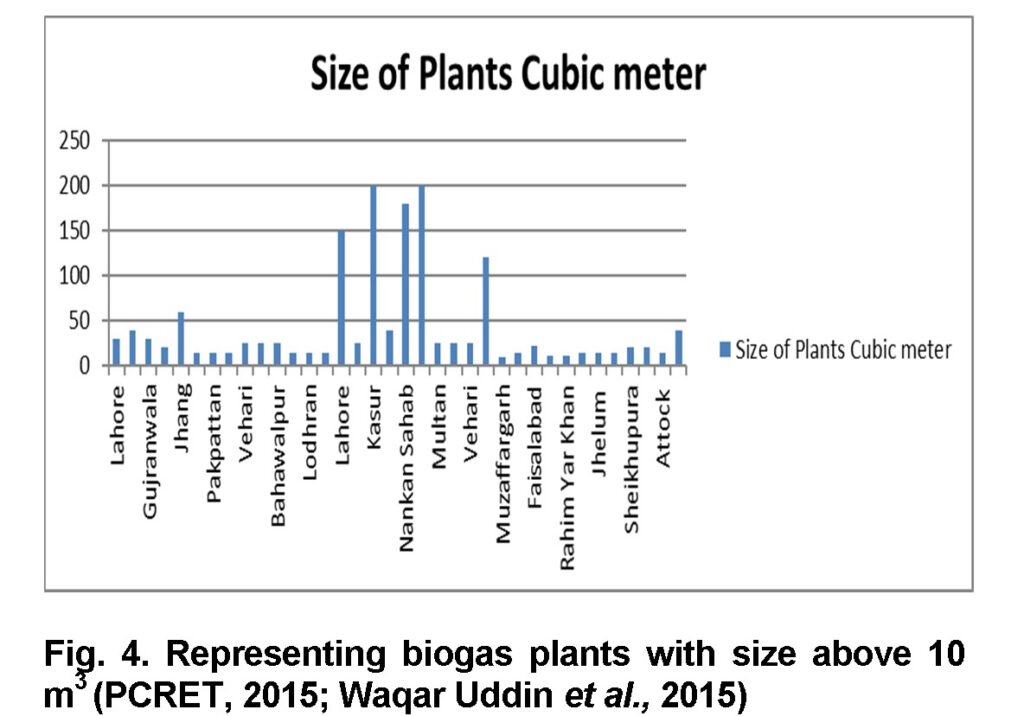
Pakistan being agriculture based country, have strong potential for the biogas commercial sector (Asif, 2009). Approximately 9 Giga Watt electricity is being generated worldwide by utilizing biomass. Pakistan is the fifth largest sugarcane producing country, with bagasse of 10 Million tons, and 50 Million tons of cane which has a potential of 3000 MW generation (PBIT, 2000). Pakistan also has a capability of producing over 21 Million tons of fertilizers (Mirza et al., 2008). The brief summaries of currently functional installed biogas plants by PCRET in two phases are shown (Figure 3).
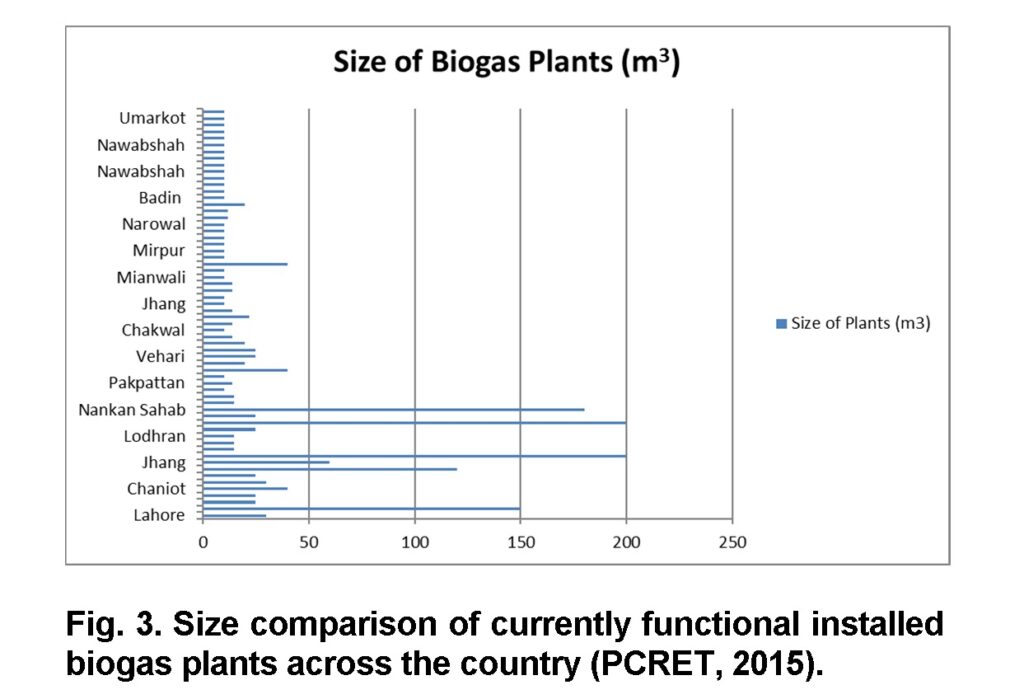
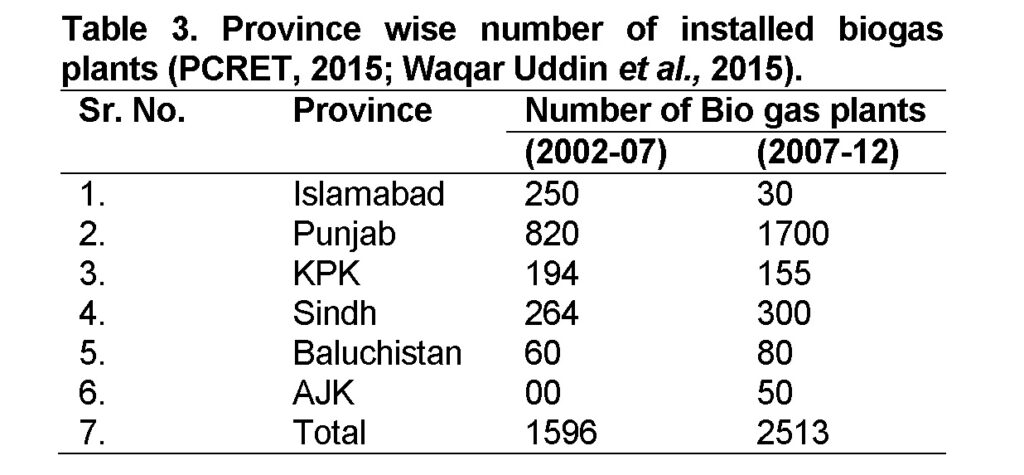
All these biogas plants (Figure 3) are greater than 10 cubic meters in size. Largest of them are 200 cubic meter power plants, one of them is planted in Kasur and other in Multan. The one in Kasur is installed in “Cheema Poultry Farm” which is used for power generation and its power is 75 KW. The second major biogas plant in Multan is planted at “Almashriq Dairy Farm” connected to a power generator of 50 KW. The province wise installed biogas plants data by PCRET is presented (Table 3). This data shows there is a potential for the establishment of commercial biogas sector. Which will not only helpful in mitigating the energy crisis, but also have a positive impact on the environment and economy of the country.
Conclusion and Recommendations
During our study, while visiting KPK region for biogas plants it is observed that users usually don’t follow the recommended practices and also there is a lack of technical coordination between stakeholders. In Charsada and Peshawar region installed biogas plants are satisfactory functioning. But there is a need for special consideration from government side for the promotion of biogas technology. There should be clear policies for technical and financial support. The success of the biogas plant is directly related to its construction and operation. Maintenance and timely repair of biogas plants also plays a vital role in proper functioning. So our recommendations are related with the operation of the biogas plant. These are like a daily feeding of the plant with the right proportion of water and dung, thorough cleansing of stoves and drainage of water condensed inside pipeline through an outlet. Also, regular oiling of the gas taps and valves, adding organic material to the slurry pits and regular check of gas leakage are highly recommended. In Pakistan major issues are related to the designing of biogas plants. Therefore, designing needs standardization in order to receive the anticipated benefits from biogas plants. We strongly recommend that further research should be conducted for more user friendly designs, with an improved quality of constructions. Keeping in view all the environmental, socioeconomic benefits of biogas. Country specially developing like Pakistan which is facing a severe challenge of energy crisis, should have a proper established commercial biogas sector.
Acknowledgement
The authors would like to express thanks for Prof. Dr. M. Subhan Qureshi, Agriculture University, Peshawar, Pakistan, for great help throughout the work, fruitful guidance, brilliant and creative remarks that helped this modest work to be produced in this form.
Conflict of Interest
There is no conflict of interest.
References
Akhter, P., 2004. Country presentations: Promotion of Renewable Energy, Energy Efficiency and Greenhouses Gas Abatement (PREGA). In: Second Regional Training and Planning Workshop on Renewable Energy.
Angelidaki, I., Ellegaard, L., 2003. Codigestion of manure and organic wastes in centralized biogas plants: status and future trends. Appl. Biochem. Biotechnol., 109(1-3):95-105.
Asif, M., 2009. Sustainable energy options for Pakistan. Renew. Sust. Energ. Rev., 13: 903-909.
Balsam, J., 2006. Anaerobic Digestion of Animal Wastes: Factors to Consider (Farm Energy Technical Note). National Sustainable Agriculture Information Service.
Berglund, M., Borjesson, P., 2006. Assessment of energy performance in the life-cycle of biogas production. Biomass Bioenerg., 30(3): 254-66.
Centre for Climate and Energy Solutions, 2000. Carbon Dioxide Emissions from the Generation of Electric Power in the United States http://www.c2es.org/technology/overview/electricity [online] (accessed on 20th May 2015).
Doorn, M.R.J., Natschke, D.F., Meeuwissen, P.C., 2002. “Review of Emission Factors and Methodologies to Estimate Ammonia Emissions from Animal Waste Handling,” US Environmental Protection Agency, Washington, DC, EPA/600/R-02/017 (NTIS PB2002-105708).
Economic Survey of Pakistan., 2012. Finance Division, Islamabad. G. O. P., 29-31.
EPA, 2005. Emission Facts, Metrics for Expressing Greenhouse Gas Emissions: Carbon Equivalents and Carbon Dioxide Equivalents, Equivalents available from http://www.epa.gov/otaq/ climate/420f05002.html (accessed 29 September 2007).
Ghimire, P.C., 2007. Final Report on Technical Study of Biogas Plants Installed in Pakistan,” Prepared by: Asia/Africa Biogas Programme, Netherlands Development Organisation (SNV).
Ilyas, S.Z., 2006. A Case Study to Bottle the Biogas in Cylinders as Source of Power for Rural Industries Development in Pakistan. World Appl. Sci. J., 1(2): 127-130.
Iqbal, M.N., Muhammad, A., Anjum, A.A., Shahzad, K.A., Ali, M.A., Ali, S., 2014. Epidemiology of Gigantocotyle explanatum in naturally infected buffaloes. Veterinaria, 1: 15-18.
Iqbal, M.N., Muhammad, A., Anjum, A.A., Shahzad, K.A., Ali, M.A., Ali, S., 2014. Prevalence of Gastrothylax crumenifer in the gastrointestine of Bubalus bubalis. Veterinaria, 1: 28-31.
Iqbal, M.N., Shahzad, K.A., Muhammad, A., 2013. Identification and prevalence of Paraphistomum cervi in naturally infected water buffaloes of central Punjab, Pakistan. Veterinaria, 1: 9-12.
Krich, K., Augenstein, D., Batmale, J.P., Benemann, J., Rutledge, B., Salour, D., 2005. Biomethane from Dairy Waste: A Sourcebook for the Production and Use of Renewable Natural Gas in California,” Prepared for Western United Dairymen. USDA Rural Development.
Lantz, M., Svensson, M., Bjornsson, L., Borjesson, P., 2007. The prospects for an expansion of biogas systems in Sweden-Incentives, barriers and potentials. Energy Pol., (35): 1830-43.
Mandeno, G., Craggs, R., Tanner, C., Sukias, J., Webster-Brown, J., 2005. Potential biogas scrubbing using a high rate pond. Water Sci. Technol., 51(12): 253-6.
Ministry of Planning, Development and Reforms Pakistan. http://www.pc.gov.pk/ [online] (accessed on 18th May 2015).
Mirza, U.K., Ahmad, N., Majeed, T., 2008. An overview of biomass energy utilization in Pakistan. Renew. Sust. Energ. Rev., 12(7): 1988-1996.
Mittal, K.M., 1996. Biogas Systems – Principal and Applications, New Age International Private Limited Publications, New Delhi.
Muhammad, A., Shah, S.I., Iqbal, M.N., Ali, S., Irfan, M., Ahmad, A., Qayyum, M., 2015. Prevalence of Gigantocotyle explanatum in buffaloes slaughtered at Sihala Abattoir, Rawalpindi. Punjab Univ. J. Zool., 30(1): 11-14.
Pakistan Council of renewable energies technologies, PCRET. http://www.pcret.gov.pk/ [online] (accessed on 24th May 2015).
Pakistan Economic Survey 2005-06. Government of Pakistan. Islamabad, Pakistan: Economic Advisers Wing, Ministry of Finance, June 2006.
Pakistan Economic survey 2012-13. http://www.finance.gov.pk/survey_1213.html [online] (accessed on 18th May 2015).
PBIT. Power generation from sugar mills; 2010. http://www.pbit.gop.pk/ [online] (accessed on 23th May 2015).
Ramachandra, T.V., Kamakshi, G., Shruthi, B.V., 2004. Bioresource status in Karnataka. Renew. Sust. Energ. Rev., 8: 1-47.
Robert, D., Perlack, L.L.W., Turhollow, A.F., Graham, R.L., Stokes, B.J., Erbach, D.C., 2005. “Biomass as Feedstock for a Bioenergy and Bioproducts Industry: The Technical Feasibility of a Billion-Ton Annual Supply,” Prepared by Oak Ridge National Laboratory.
The US Inventory of Greenhouse Gas Emissions and Sinks, 2006. Fast Facts available from http://yosemite.epa.gov/oar/globalwarming.nsf/UniqueKeyLookup/RAMR6P5M5M/$ File/06FastFacts.pdf
Thomson Reuters Foundation. Provincial government is providing subsidies to help farmers and rural families equip their homes with small-scale biogas plants. 1 October 2013. http://news.trust.org//item/20131001093435-o9hzy/?source=spotlight [online] (accessed 14 April 2016).
Van Dyne, D.L., Weber, J.A., 1994. Biogas Production from Animal Manures: What Is the Potential? Industrial Uses of Agricultural Materials. USDA/ERS Outlook Report IUS-4, December 2006.
Waqar Uddin, Khan, B., Shaukat, N., Majid, M., Mujtaba, G., Mehmood, A., Ali, S.M., Younas, U., Anwar, M., Almeshal, A.M., 2015. Biogas potential for electric power generation in Pakistan: A survey. Renew. Sust. Energ. Rev., 54: 25-33.
World Energy Council, 2001. Survey of Energy Resources, 19th Edition, London, UK.