Role of Camel in Pastoral Mode of Life and Future Use of rCGH as a Therapeutic Agent in Milk and Meat Production
1School of Mechanical and Manufacturing Engineering, National University of Sciences and Technology, Sector H-12, Islamabad 44000, Pakistan.
2University College of Veterinary and Animal Sciences, The Islamia University of Bahawalpur, Bahawalpur 63100, Pakistan.
3The School of Life Sciences, Fujian Agriculture and Forestry University, Fuzhou 350002, China.
4Pakistan Science Mission (PSM), Noor Kot 51770, Pakistan.
*Corresponding author:
Mirza Imran ShahzadEmail:
mirza.imran@iub.edu.pkViews 3466
Abstract
To combat the issues of food shortage due to increasing human population, camels can serve as the best useful addition to the nutrient supply chain in terms of milk, meat and other production. With a camel population of 1.2 million heads, Pakistan offers a big market for both a live-export trade and a milk and meat industry based on feral camels. The main objective of this article is to review the role of camels in pastoral mode of life related to them. It also aims at identifying the possible role of rcGH as a therapeutic agent in increasing camel productivity and its value chain addition in the marketing of camel as a whole in Pakistan. Administration of recombinant ontogeny endocrine (rCGH) in animals is a useful approach to manipulate endocrine system and metabolic pathways towards faster growth rate, muscle deposition, milk yield and better feed efficiency.
Keywords
Food shortage, recombinant ontogeny endocrine, therapeutic agent, camel in Pakistan.
Citation
Khan, R., Shahzad, M.I., Iqbal, M.N., 2016. Role of Camel in Pastoral Mode of Life and Future Use of rCGH as a Therapeutic Agent in Milk and Meat Production. PSM Vet. Res., 01(1): 32-39.
Introduction
The animal subdivision has conventionally been, and is likely to be, section of sociable set-up to play its role beyond the commercial one. Livestock has a vital role in the economy being sources of income for 45 percent of countries labor force and 60% of rural population and contributing 11.6% to national grass domestic product (GDP) and 55% to agriculture GDP (Economic Survey of Pakistan, 2012; Iqbal et al., 2013; Iqbal et al., 2014; Muhammad et al., 2015). In tropical and sub-tropical areas of Pakistan, gastrointestinal nematodes (GINs) infections are a great threat to production potential of livestock thus destabilizing the economy (Iqbal et al., 2014; Shaukat et al., 2016).
Camel is one of the important livestock specie which plays a major role in pastoral mode of life by fulfilling basic demands of livelihood. They are even-toed ungulates in the genus Camelus. With average life expectancy of 30 to 50 years. Humans first domesticated camels between 3,500–3,000 years ago. They are one of the most fundamental props of the domestic economy and foodstuff security for several countries as they provide mankind with a range of products and services (e.g. milk, meat, racing, riding and packing). The camel is characterized by its high efficiency in the metabolic processes. This animal has a unique ability to convert the scanty industrial plant resources of the desert into milk center, meat and fiber. Camel has almost no rivalry for feedstuff with supplementary wildlife and is a tough animal, relatively grubs fewer, goes into so called nap for small intervals and retains a long lasting reminiscence. Its strength, stamina and submissiveness have been oppressed for infinite cultivated maneuvers. This unique adaptability brand, this specie is ideal for manipulation underneath the dry and semi-arid terrestrial circumstances (Iqbal, 1999; Khan et al., 2003).
The two species of camels which are predominantly used commercially in the world are Camelus dromedarius (one-humped Dromedary) and Camelus bactrianus (two-humped Bactrian camel). There are 24,246,291 million one-humped camels in the world with 80% of them in Africa and the utmost population in Somalia is 7 million and Sudan is 4.25 million. They are also originating in the Arabian deserts, Iran, Afghanistan, Central and South Asia. In Asia about 70% of dromedaries are found in India and Pakistan (Zeng and McGregor, 2008).
Camelus bactrianus is found in central Asia, Russia and China. In Pakistan, the dromedary eccentric of camels are found with a population of 1 million (Economic Survey of Pakistan, 2013-14), while the number of Bactrian’s are said to be approximately 1000 fauna only, which are available in extremely northern areas of the country or a few specimens are kept in the zoos.
In many countries both species have been commercially exploited however, this utilization has been based on farmed camels, and has never been associated to the control of a wild population. There have been numerous attempt to develop both a live-export trade and a milk and meat industry based on feral camels, but these have failed to generate enough working investment to make the industry sustainable in the long-term. However commercial utilization of camels based on a wild harvest of feral camels is an attractive management option for controlling the feral camel population rather than a unified industry such as the beef or sheep trade with their associated substructure (Zeng and McGregor, 2008).
In spite of a dynamic adherent of the food manufacturing intimate of livestock, camel has for a long fourth dimension remained the most neglected animal in the field of scientific research. Occurrence in arid, semi-arid and tropical areas of developing countries where deprived nutrition and farming are the main flaws, inaccurate estimates of camel populations due to lack of regular census, rare chance of formal marketing of camel products and underestimation of their contribution to subsistence and the national economy are some of the reasons for this neglect. Also less attention has been given to camel improvements for several centuries in the countrywide development strategies (Njiru, 1993; Sohail, 1983).
Growth hormone is an important polypeptide required for normal growth and development of vertebrates. Growth hormone is commercially important in the areas of medicine, animal husbandry, fish farming and animal production (DeNoto et al., 1981, Ayson et al., 2000). Lactating animals’ growth hormones have been used by biotechnology to enhance milk and meat production and in controlling the growth development of the animal. It also regulates complex physiological processes such as metabolism, reproduction and cell proliferation (Devlin et al., 1994).
This literature review aims at identifying the possible commercial uses of camels and discusses the implications for the management of feral camels and their impacts in Pakistan and to seek possible role of recombinant growth hormone as a therapeutic agent for increasing the productivity of camels of Pakistan in terms of meat and milk.
Camel in Pakistan
The majority of camels in Pakistan are kept by migratory pastoralists in subsistence production systems except those kept in irrigated areas by farmers and a small number used for pulling camel carts in cities. Not all farmers keep a camel but most often maintaining one camel suffices for various agricultural operations of a farmer. Off-take of live animals for sale as slaughter stock is much less as compared to that of sheep, goat, cattle and buffaloes. However, apart from routine slaughter, on festive and religious occasions such as Eid-ul-Azha , hundreds of people would slaughter camels and consume their meat. Precise information about the camel breeds in Pakistan is not available. In fact the camel has so far not attracted the attention of planners and policy makers in this country. Its importance and potential as a milk and meat producing animal has neither been realized nor its role in agrarian economy been properly assessed. Moreover, export potential of this species has also not been visualized.
The camel appears to be a victim of intentional neglect as if it is an unwanted animal. Probably, none of the teaching institutions in Pakistan offering degrees in animal science ever included in their curriculum a teaching course on camel. However, very recently, the University of Agriculture, Faisalabad, has taken lead and has included the camel in the teaching courses for the degree of B.Sc. (Hons.) Animal Husbandry. In spite of an all-out neglect, the camel as a farm animal and as an economic entity has not only survived but has also exhibited a steady growth in its population. This fact itself speaks of the importance of camel. The only well documented information available about the camel breeds in Pakistan is by (Jasra and Isani, 2000). They have listed twenty breeds of camel in addition to some information about the Bactrian camel. The characteristics of some of the breeds are so much overlapping that it may be safely stated that there are more names than real breeds of the camel. In other words, except some very distinct breeds, the same type of animals found in contiguous regions of the country are claimed as different breeds, which in many cases, at best, may be termed as varying strains and not breeds. Jasra and Isani, (2000) have rightly suggested that there are so many gaps in our knowledge in this regard, therefore further detailed studies might bring more facts to surface.
On the basis of information as mentioned above, the province wise list of the camel breeds is as follows:
Balochistan: Brahvi, Kachhi, Kharani, Lassi, Makrani, Pishin and Rodbari
Khyberpaktonkha: Gaddi, Ghulmani, Khader and Maya
Punjab: Bagri (Booja), Briella (Thalocha), Campbelpuri, Kala-Chitta, and Marecha
Sindh: Dhatti, Kharai, Larri (Sindhi) and Sakrai
Good milking camels do exist in Pakistan and some border areas of India but their potential to produce more milk has not been properly exploited. In North Eastern Africa where about two-thirds of world dromedary population is found, so great is the requirement for milk production and so low is the camel’s reproductive rate that all females will be bred and milked. Culling of any animal with mammary gland seems impossible. Therefore it is not possible to apply the degree of selection pressure necessary to achieve increased production and type fixation.
No reliable work on results from selection seems to have been published. However, enough variation exists for selection to have significant benefit. Milk production for 305 days has been reported to vary from 1200 kg to 10,700 kg. It shows that given sufficient time for selection for milk yield, milk quality, less intense maternal instinct and development of management systems, camel dairying may be commercially feasible. It appears appropriate to suggest that if a milking type is to be developed; such activities will need to be carried out at appropriate institutions (Beg et al., 1986).
Population in Pakistan
Balochistan 41.22%, Punjab 21.61%, Sindh 30.23%, NWFP 6.94% (Iqbal, 2007).
Camel in Cholistan
Briella camel is mostly reared in the Lesser Cholistan and on the fringe irrigated areas of district Bahawalpur. The Briella camels have heavy strong built and large body frame. The coat color varies from light sandy to dark brown with short coarse hair. Dark brown colored animals are preferred by local people. Briella camels have muscular body with dome shaped head. The head is heavy, with a well-defined looking. The neck is medium sized with marked curve. Eyes are bright, round with alert look and are protruding. Nose is thick, lips pendulous and ears are rounded and coarse. Shoulders are strong, broad and well set to the chest. Hump is very well developed in males and is placed in the center of the back. The chest pad is well developed and its touching ground evenly shows good confirmation. Legs are strong, bony, stout and well separated so that legs do not rub while walking. Hind legs are slightly weaker than for legs and are inward curved. The foot pads are medium sized and soft. Themilk vein is straight and prominent. Milking capacity of female camel is around 10 liters, while well fed animals can produce up to 15-20 liters of milk daily (Ali et al., 2009). Shah et al., (2008) recorded significant differences in the genotype frequency among different breeds of camels.
Importance of camel milk and composition
Studies on dairy animals (buffalo, yak, mare, and camel) are rather scarce, in spite of their nutritional interest. In this context, camel milk needs to be further investigated. There are only a few references on camel milk, whether they concern production (Faye, 2004) or composition aspects (Farah et al., 2004). Yet camel milk is an important source of proteins for the people living in the arid lands of the world. Also, camel milk is known for its medicinal properties, which are widely exploited for human health (Marai et al., 2009).
The lactation length in camels extends up to 14-16 months. The milk production potential of Pakistani camel is evident from the fact that they can produce up to 12000 liters in a lactation period ranging from 9 to 18 months (Schwartz, 1992). Camel milk is supposed to have nutritive as well as medicinal properties (Yagil, 2004).
Milk production and composition of Dromedary Camel
Camel milk is highly nutritious. It is considered a complete food and can be consumed exclusively while meeting all nutritional requirements. Camel milk is opaque white in color with normal odor and salty taste. The percent value of moisture (88.55-90.15), total solids (9.85-11.45), fat (2.60-3.20), SNF (7.25-8.25), protein (3.73-3.89), casein (2.90-3.02), ash (0.82-0.85) acidity (0.12-0.14) and pH (6.36-6.58) are quite different from other animals (Mohamed and Ali, 2008). Moisture and protein have been found to be higher in camel milk compared to cow milk. Comparative low percentages of total solids and fat in camel milk have definite positive benefits of drinking camel milk over cow milk. Post-partum changes in gross chemical composition of camel milk showed an increase in fat from 0.10 to 3.78 while protein decreased from 17.62 to 2.66 percent after 27 days of parturition (Shah et al., 2008). The fat molecules are joined to protein, so there is no stress on the liver to process it. In late phase of lactation the ash, fat and total solids were significantly higher than in the early phase of lactation. The fat is present in fixed amount in milk and its percentage changes according to the water content. Hence a fall in water content will increase the fat percentage while an increase in water will decrease it.
In the desert high water content with low fat percentage is a definite advantage. The higher ash contents during late lactation suggest that camel milk can provide a satisfactory level of minerals (Marai et al., 2009). Camel milk is also rich in vitamin C, iron and calcium. It lacks beta-lacto globulin and a “new” beta-casein , therefore it is not reactive to children with autism and even non-allergenic to those with even the most sensitive allergy to milk and casein. Moreover camel micelles have been found to be larger in size (15 nm) than those of cow milk or human milk (Restani et al., 1999).
Milk production and composition of Bactrian camel
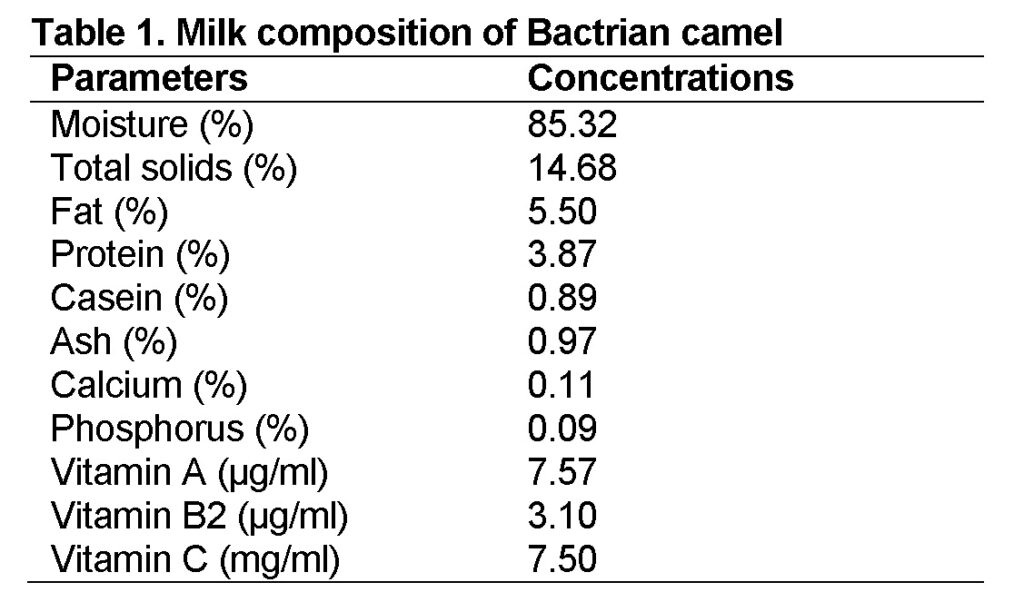
The Bactrian camels are important component of the cold desert ecosystem. Milk production potential of Bactrian camel varies, generally it is considered to be low in milk production (0.5-1 liters/day) as compared to dromedaries where-as the data of milk production of Bactrian camel of Kazakhstan is as high as 6-7 liters/day, which is more than that produced by local cows and dromedaries. The lactation length varies from 14-18 months and lactation yield varies from 500-1254 liters. Peak milk yield is at around 3-4 months after parturition. The Bactrian camel’s milk is high in fat because these animals live in a cold environment and more energy is required by their calves. The fat quantity in milk also depends upon the availability of water (Marai et al., 2009). The composition of fatty acids in Bactrian camel showed slight differences than to dromedary milk. Dromedary milk contains higher amount of C10, C18 and C18:1(n-7), while Bactrian milk is richer in C14, C16 and C18:1(n-9) (Narmuratova et al., 2006). The milk is rich in vitamin-C (Table 1).
Medicinal and immune benefits of camel milk
There is reports that camel milk has medicinal properties (Yagil, 2004) suggesting that this milk contains protective proteins which may have possible role for enhancing immune defense mechanism. Camel milk also contains higher amount of zinc which is required for the normally functioning immune system (Hansen, 1982). Antibacterial and antiviral activities of these proteins of camel milk have been established (El-Agamy, 2006, Bastos et al., 2001). Camel milk is used for treating dropsy, jaundice, spleen ailments, tuberculosis, asthma, anemia and piles (Redwan, 2009). It improves liver functions in chronic hepatitis (Shah et al., 2008). Camel milk has insulin like activity, regulatory and immunomodulatory functions on β-cells (Bastos et al., 2001). It exhibits hypoglycemic effect when given as an adjunctive therapy, which might be due to presence of insulin/insulin like protein in it (Ahmad et al., 2010) and possesses beneficial effect in the treatment of diabetic patients. It has also been used for the treatment of food allergies (Shabo et al., 2005), autism (Shabo and Yagil, 2005), different types of tuberculosis (Marai et al., 2009), multiple sclerosis, psoriasis, lupus, allergies-asthma (Yadav et al., 2015), crohn’s disease (Sazmand et al., 2011) and cancer (Mukasa-Mugerwa, 1981). A high content in unsaturated fatty acids contributes to its overall dietary quality (Kamal et al., 2007, Kappeler et al., 2003). The low quantity of b-casein and the lack of b-lacto globulin are linked to the hypo-allergic effect of camel milk. Some known protective proteins, in camel milk are: Peptidoglycan, Lacto-ferrin , Lysozyme, Lacto peroxidase, immunoglobulins (Igs) including unique subclasses IgG2 and IgG3 and Vitamin C play a central role in penetrating into tissues and organs to fight infection and aid repair, where human antibodies cannot reach) (Kappeler et al., 2003, Kamal et al., 2007).
Camel Meat Production
Camel produces large quantities of meat compared to other farm animals, where the weight of a camel is between 350-700 kg. The proportion of camel net meat is high as it varies by different factors such as age, type of nutrition and type of breeding, ranging from 43.6-62.7%, fat and bones are zero-4.8% and 15.9-38.1% respectively. Camel’s meat represents about 8% of the meat production in the Arab countries. Male camels are slaughtered when they are 1-3 or even 4-5 years old, which is considered their best age for meat production. It has a little sweet taste because of the presence of glycogen, and its color is red or dark brown. United Arab Emirates (19853 tons/year) are representing the highest production of camel meats in the world.
General characteristics of camel meat
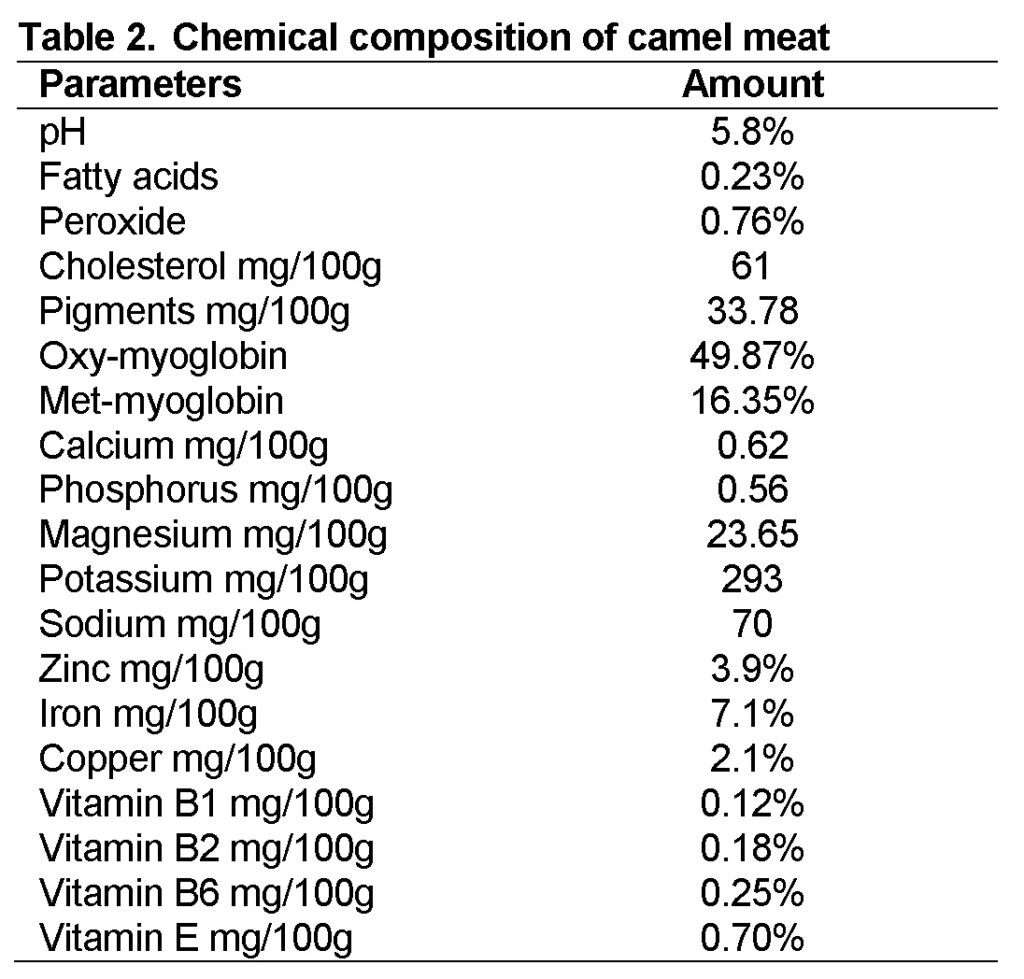
Camels are good potential meat producers especially in arid regions where other meat-producing animals do not thrive. They grow well and yield carcasses of a comparable weight to beef cattle if optimal management conditions are provided. Camel meat is acceptable for human consumption and in some communities it may replace meat from other animals. Reports that camel meat is less tender than beef are probably due, at least in part, to the higher average animal age and/or to post-mortem carcass chilling conditions. Camel meat, especially from young animals, contains low fat with low cholesterol as well as being a good source of amino acids and minerals. More research work in areas of meat production, technology, marketing, and social awareness is needed to exploit the potential of camels as a source of meat. The chemical composition of camel meat is given in table 2.
A camel carcass can provide a substantial amount of meat for human consumption with certain parts of the carcass such as the hump and liver considered a delicacy that is favored in Middle Eastern markets. Although the marketing systems for camel meat are not well organized, there is evidence of a high demand for fresh camel meat and for camel meat to be used in blended meat products even among societies not herding camels (Morton, 1984; Perez et al., 2000; Shalash, 1979a).
Camel meat could be a cheap option to meet the growing needs for meat in developing countries especially for low income population groups (El-Mossalami., 1996; Saparov & Annageldiyev, 2005). The dromedary camel is a good source of meat especially in areas where the climate adversely affects the performance of other meat animals. The average birth weight of camels is about 35 kg, but it varies widely between regions, breeds and within the same breed. The meat producing ability of camels is limited by modest growth rates (500 g/day). However, camels are mostly produced under traditional extensive systems on poor levels of nutrition and are mostly slaughtered at older ages after a career in work, racing or milk production. Camels reach live weights of about 650 kg at 7–8 years of age, and produce carcass weights ranging from 125 to 400 kg with dressing-out percentage values from 55% to 70%. Camel carcasses contain about 57% muscle, 26% bone and 17% fat with fore halves (cranial to rib 13) significantly heavier than the hind halves. Camel lean meat contains about 78% water, 19% protein, 3% fat, and 1.2% ash with a small amount of intramuscular fat, which renders it a healthy food for humans. Camel meat has been described as raspberry red to dark brown in color and the fat of the camel meat is white. Camel meat is similar in taste and texture to beef.
The amino acid and mineral contents of camel meat are often higher than beef, probably due to lower intramuscular fat levels. Recently, camel meat has been processed into burgers, patties, sausages and shawarma to add value. Future research efforts need to focus on exploiting the potential of the camel as a source of meat through multi-disciplinary research into efficient production systems, and improved meat technology and marketing (Kadim et al., 2006).
Camel’s meat has low fat and high moisture content. Fat in camel meat amounts to 1.2 %-1.8 % and in beef 4 %-8 %. The amount of water is 20%. Camel meat contains a high ratio of good quality of protein. Camel meat is also a good source to many vitamins, especially vitamin B complex and important minerals such as iron, calcium and phosphorus. Camel meat is also characterized by low level of cholesterol (61 mg) as compared to other farm animals like beef (75-86 mg), making it a healthy food for humans. Camel meat contains a high percentage of glycogen, so that it is used in many food industries such as sausage, corned beef, and shwarma. For this reason, are often advised slaughtered young camels that the meat is softer and has better taste than adult camels or aged. The meat fat is creamy with yellow color and soft, smooth as compared to other farm animals. From a point of health, the nutritional value of camel meat is much better than other animals, due to fact that camel meat contains a high amount of amino acids compared to the beef, sheep and poultry.
The health benefits of camel meat
Camel meat has been used since the late sixteenth century in traditional Chinese medicine. Camel meat is used to improve resistance to disease, to strengthen the muscles and bones, to moisten the skin, and to relieve internal pain. The fat extracted from the camel’s hump is used to effectively relieve pain and swelling (Li 1596; Encyclopedia, 1990). Many Chinese restaurants serve, or plan to serve, their customers camel meat. Although camel meat is not commonly consumed in many parts of China, people are increasingly interested in tasting the meat (Liu, 2006). In Australia, the National Heart Foundation has endorsed camel meat (Ellard and Seidel, 2000).
Methodology to produce camel growth hormone
Growth hormones are also used as drugs in human and animals. They have both direct and indirect effects. Direct effects are mediated by binding of growth hormone to its receptor cells, such as breakdown of triglyceride by action of growth hormone .Indirect effects are mediated by insulin like growth factor-1.IGF-1 is the hormone which is secreted in response to growth hormone from the liver and other tissues. Due to the IGF-1 the growth promoting effects of growth hormone is majorly play on its target cells. From the above distinct information we discuss the two roles of Growth hormone.
Major roles
Growth hormones have two major roles.
Effects on growth
Growth hormone stimulate liver and other tissues to secrete IGF-1 which results in bone formation by stimulating differentiation of chondrocytes and muscle growth by differentiation of myoblasts.
Metabolic effects
These include effects of growth hormone on Protein, lipid and Carbohydrate metabolism.Increase protein anabolism by increasing amino acid uptake and protein synthesis and decreasing protein oxidation. Increase fat catabolism by increasing triglyceride breakdown and oxidation in adipocytes. Have anti insulin activity, so, play role to maintain blood glucose level.
Control of growth hormone secretion
Primary controllers of growth hormone are two hypothalamic hormones and one hormone from stomach. Growth hormone- releasing hormone (GHRH) is a hypothalamic peptide that stimulates synthesis and secretion of growth hormone. Somatostatin(SS) is also hypothalamic peptide that inhibits growth hormone release in response to GHRH and other stimulating factors like low blood glucose level. Ghrelin is a peptide secreted from stomach. It binds to receptors on somatotrophs and stimulates secretion of growth hormone. Growth hormone secretion is also regulated by negative feedback mechanism involving IGF-1.High blood glucose level of IGF-1 leads to decreased concentration of growth hormone. It also feeds back to inhibit GHRH secretion and have direct inhibitory effect on secretion of the somatotroph. Basal concentration of GH in blood is very low. In children and young adults, growth hormones are released after the onset of deep sleep.
Two hormones are originated by animal source.
Bovine growth hormone (BGH)
Improve Milk production (Perala et al., 2011).Improve body Weight and Fat ratio of meat (Etherton and Kensinger, 1984). Cause reduction of Manure, Nitrogen and Methane from Urine (Bauman et al., 1989) .Equine Growth Hormone. With regard to horses, equine growth hormones have following functions: Prevent muscle wasting and repair muscle tissues. Improve physical conditions by restoring nitrogen balance. Stimulate early maturity in young horses (Stewart and Tuffnell, 1991). Used for ovulation in mares. Repair tendons and fractured bones and promote wound healing. Increase milk production in lactating mares.
Caprine Growth Hormone (CHGH)
In lactating goats rBGH increases milk production 23% and mammary gland growth, with it being similar to prolactin (Boutinaud et al., 2002). However, the recombinant CHGH has not been produced yet. Recombinant CHGH can be used in both animals as it is identical to ovine.
Recombinant Growth Hormone
For centuries, the genetic composition of domestic animals has been manipulated to enhance their usefulness to humans. In the past decade, development of recombinant DNA technology has enabled scientists to isolate single genes, analyze and modify their nucleotide structures, make copies of these isolated genes, and transfer copies into the genome. An animal that integrates recombinant DNA in its genome is called “transgenic,” and the transferred gene is called a “transgene.” Recently, medically important human proteins have been produced in large quantities in milk of transgenic sheep. Unless unforeseen complications arise during extraction and purification of these proteins, we can expect to see such products being clinically evaluated soon. Use of transgenic animals for food and fiber remains in the future. Few agriculturally useful genes have thus far been isolated, sequenced, and cloned. In addition, knowledge of gene regulation is currently insufficient. As a consequence, integrated transgenes are insufficiently controlled, resulting in overexpression that adversely affects the health status of transgenic with elevated growth hormone (GH) and may limit the usefulness of other structural transgenes (Hammer et al., 1985).
Pharmaceutical and Biotechnological Uses of Growth Hormones
In past years, growth hormone purified from human cadaver pituitaries was used to treat children with severe growth retardation. More recently, the virtually unlimited IGF-1 leads to decreased concentration of growth hormone. It also feeds back to inhibit GHRH secretion and have direct inhibitory effect on secretion of the somatotroph. Basal concentration of GH in blood is very supply of growth hormone produced using recombinant DNA technology has led to several other applications to human and animal populations.Human growth hormone is commonly used to treat children of pathologically short stature. There is concern that this practice will be extended to treatment of essentially normal children – so called “enhancement therapy” or growth hormone on demand. Similarly, growth hormone has been used by some to enhance athletic performance. Although growth hormone therapy is generally safe, it is not as safe as any therapy and does entail unpredictable health risks. Parents that request growth hormone therapy for children of essentially-normal stature are clearly misguided. The role of growth hormone in normal aging remains poorly understood, but some of the cosmetic symptoms of aging appear to be amenable to growth hormone therapy.
This is an active area of research, and additional information and recommendations about risks and benefits will undoubtedly surface in the near future. Growth hormone is currently approved and marketed for enhancing milk production in dairy cattle. There is no doubt that administration of bovine somatotropin to lactating cow’s results in increased milk yield, and, depending on the way the cows are managed, can be an economically-viable therapy. However, this treatment engenders abundant controversy, even among dairy farmers. One thing that appears clear is that drinking milk from cattle treated with bovine growth hormone does not pose a risk to human health.
Limitations
For increased synthesis of meat production at a faster rate, growths hormones are given to animals so that they grow early Dairy products contain both hormones and growth factors. Although these hormones enhance, productivity, and profit but they may hold bad effects on human health.
Acknowledgement
The authors are highly thankful to Prof Dr Muhammad Ashfaq, Chairman Biochemistry and Biotechnology, The Islamia University of Bahawalpur, for technical support during this research work. The authors acknowledge that this work is from student thesis submitted in Higher Education Commission (HEC), Pakistan.
Conflict of Interest
The authors confirm that this article content has no conflict of interest.
References
Ahmad, S., Yaqoob, M., Hashmi, N., Ahmad, S., Zaman, M., Tariq, M., 2010. Economic importance of camel: unique alternative under crisis. Pak. Vet. J., 30: 191-7.
Ali, I., Chaudhry, M.S., Farooq, U., 2009. Camel rearing in Cholistan desert of Pakistan. Pak. Vet. J., 29: 85-92.
Ayson, F.G., Jesus, D.E., Amemiya, E.G.T., Moriyama, Y., Hirano, S., Kawauchi, T.H., 2000. Isolation, cDNA cloning, and growth promoting activity of rabbitfish (Siganus guttatus) growth hormone. Gen. comp. endocrinol., 117:251-259.
Bastos, E., Cravador, A., Azevedo, J., Guedes-pinto, H., 2001. Single strand conformation polymorphism (SSCP) detection in six genes in Portuguese indigenous sheep breed’Churra da Terra Quente’. Biotech, Agron, Soc., 5: 7-15.
Bauman, D., Dunshea, F., Boisclair, Y., Mcguire, M., Harris, D., Houseknecht, K., 1989. Regulation of nutrient partitioning: homeostasis, homeorhesis, and exogenous somatotropin. Keynote Address. Proceedings of the Vllth International Conference on Production Disease in Farm Animals. Ithaca, NY: Cornell University.[Links],.
Beg, O.U., Von., Bahr-lindström, H., Zaidi, Z.H., Jörnvall, H., 1986. Characterization of a camel milk protein rich in proline identifies a new β-casein fragment. Regul. pep., 15: 55-61.
Boutinaud, M., Rulquin, H., Keisler, D., Djiane, J., Jammes, H., 2002. Use of somatic cells from goat milk for dynamic studies of gene expression in the mammary gland. J. anim. sci., 80: 1258-1269.
Denoto, F.M., Moore, D.D., Goodman, H.M., 1981. Human growth hormone DNA sequence and mRNA structure: possible alternative splicing.N. A. R., 9: 3719-3730.
Devlin, R.H., Byatt, J.C., Mclean, E., Yesaki, T.Y., Krivi, G.G., Jaworski, E.G., Clarke, W.C., Donaldson, E.M., 1994. Bovine placental lactogen is a potent stimulator of growth and displays strong binding to hepatic receptor sites of coho salmon.GEN. COMP. ENDOCR., 95: 31-41.
Economic Survey of Pakistan., 2012. Finance Division, Islamabad. G. O. P., 29-31.
Economic Survey of Pakistan., 2013-14. Economic Advisor’s Wing. Ministry of Finance. Government of Pakistan, Islamabad.
El-agamy, E., 2006. Camel milk. Handbook of milk of non-bovine mammals, 297e344.
Ellard, K., Seidel, P., 2000. Development of a Sustainable Camel Industry. Rural Industry Research and Development Corporation (RIRDC), Canberra.
El-Mossalami, E., Awad, Y., Ibrahim, A., Diab, O., 1996. Major chemical constituents of beef, buffalo and camel’s meat. Vet. Med. J. Giza., 44: 49–53.
Encyclopedia., 1990. Camel meat, Available at: http://www.100md.com, Retrieved 15 January 2007.
Etherton, T.D., Kensinger, R.S., 1984. Endocrine regulation of fetal and postnatal meat animal growth. J. Anim. Sci.,59: 511-528.
Farah, K., Nyariki, D., Ngugi, R., Noor, I., Guliye, A., 2004. The Somali and the camel: Ecology, management and economics. Anthropologist, 6: 45-55.
Faye, B., 2004. Camel and desert: new trends of the camel sciences. Desertification Combat and Food Safety: 3.
Hammer, R.E., Pursel, V.G., Rexroad, C.E., Wall, R.J., Bolt, D.J., Ebert, K.M., Palmiter, R.D., Brinster, R.L., 1985. Production of transgenic rabbits, sheep and pigs by microinjection.
Hansen, L.P., 1982. Large sample properties of generalized method of moments estimators. Econometrica. J. E. A., 1029-1054.
Iqbal, A., 1999. Studies on Some of the Productive, Reproductive and Behavioural Aspects of Camel in Pakistan. University of Agriculture, Faisalabad.
Iqbal, A., 2007. Achievements of research in the field of camelids. Anim. Prod. Sci. Worldwide, 3, 167.
Iqbal, M.N., Muhammad, A., Anjum, A.A., Shahzad, K.A., Ali, M.A., Ali, S., 2014. Epidemiology of Gigantocotyle explanatum in naturally infected buffaloes. Veterinaria, 1: 15-18.
Iqbal, M.N., Muhammad, A., Anjum, A.A., Shahzad, K.A., Ali, M.A., Ali, S., 2014. Prevalence of Gastrothylax crumenifer in the gastrointestine of Bubalus bubalis. Veterinaria, 1: 28-31.
Iqbal, M.N., Shahzad, K.A., Muhammad, A., 2013. Identification and prevalence of Paraphistomum cervi in naturally infected water buffaloes of central Punjab, Pakistan. Veterinaria, 1: 9-12.
Jasra, A.W., Isani, G., 2000. Socio-economics of Camel Herders in Pakistan, Camel Applied Research and Development Network.
Kadim, I.T., Mahgoub, O., Al-Marzooqi, W., Al-Zadgali, S., Annamali, K., Mansour, M.H., 2006. Effects of age on composition and quality of muscle Longissimus thoracis of the Omani Arabian camel (Camelus dromedaries). Meat Sci., 73: 619–625.
Kamal, A.M., Salama, O.A., El-saied, K.M., 2007. Changes in amino acids profile and camel milk protein during the early lactation. Int. J. Dairy. Sci., 2: 226-234.
Kappeler, S., Farah, Z., Puhan, Z., 2003. 5′-Flanking regions of camel milk genes are highly similar to homologue regions of other species and can be divided into two distinct groups. J D. S., 86: 498-508.
Khan, B.B., Arshad, I., Riaz, M., 2003. Production and management of camels, University of Agriculture, Faisalabad, Department of Livestock Management.
Li, S., 1596. Compendium of Materia Medica (in Chinese). Nanjin, China.
Liu, Z., 2006. Restaurants are going to serve camel meat (in Chinese), Available at: http://www. xinhuanet.com/food/gzys.htm, Retrieved 20 January 2007.
Marai, I.F., Zeidan, A., Abdel-samee, A., Abizaid, A., Fadiel, A., 2009. Camels’reproductive and physiological performance traits as affected by environmental conditions. Tropical and Subtropical Agroecosystems, 10, 129-149.
Mohamed, N., Ali, S., 2008. Camel milk modulates gamma radiation induced biochemical hazardous changes in rats.
Morton, R. H., 1984. Camels for meat and milk production in subSahara Africa. J. D. S., 67: 1548–1553.
Muhammad, A., Shah, S.I., Iqbal, M.N., Ali, S., Irfan, M., Ahmad, A., Qayyum, M., 2015. Prevalence of Gigantocotyle explanatum in buffaloes slaughtered at Sihala Abattoir, Rawalpindi. Punjab Univ. J. Zool., 30(1): 11-14.
Mukasa-mugerwa, E., 1981. The camel (Camelus dromedarius): A bibliographical review, ILRI (aka ILCA and ILRAD).
Narmuratova, M., Konuspayeva, G., Loiseau, G., Serikbaeva, A., Barouh, N., Montet, D., Faye, B., 2006. Fatty acids composition of dromedary and bactrian camel milk in Kazakhstan. J. CAM. PRAC RES., 13: 45.
Njiru, G., 1993. Economics of camel production. Camel Production. A series of lectures given by FARM-Africa at Nairobi University, Nairobi, Kenya.
Perälä, M-M., Valsta, L. M., Kajantie, E., Leiviskä, J., Eriksson, J.G., 2011. Impact of early growth on postprandial responses in later life. PloS. One., 8: e24070.
Perez, P., Maino, M., Guzma´n, R., Vaquero, A., Ko¨brich, C., Pokniak, J., 2000. Carcass characteristics of Ilamas (Lama glama) reared in Central Chile. Small Rumin. Res., 37: 93–97.
Redwan, E.-R.M., 2009. Animal-derived pharmaceutical proteins. J. Immunoassay. Immunochem., 30: 262-290.
Restani, P., Gaiaschi, A., Plebani, A., Beretta, B., Cavagni, G., Fiocchi, A., Poiesi, C., Velona, T., Ugazio, A., Galli, C., 1999. Cross-reactivity between milk proteins from different animal species. Clinical and experimental allergy: J. BSACI., 29: 997-1004.
Saparov, G., Annageldiyev, O., 2005. Meat Productivity of the camel Arvana breed and ways to increase it. In B. Faye & P. Esenov (Eds.), Desertification Combat & Food Safety (pp. 211–214). IOS Press.
Sazmand, A., Rasooli, A., Nouri, M., Hamidinejat, H.,Hekmatimoghaddam, S., 2011. Serobiochemical alterations in subclinically affected dromedary camels with Trypanosoma evansi in Iran. Pak. Vet. J., 31: 223-226.
Schwartz, H., 1992. Productive performance and productivity of dromedaries (Camelus dromedarius). Anim. Res. Dev., 35: 86-98.
Shabo, Y., Barzel, R., Margoulis, M., Yagil, R., 2005. Camel milk for food allergies in children. IMAJ-RAMAT GAN., 7: 796.
Shabo, Y., Yagil, R., 2005. Etiology of autism and camel milk as therapy. Int. J. Disabil. Hum. Dev., 4: 67-70.
Shah, M., Reissmann, M., QureshI, A., Schwartz, H. 2008. Evaluation of six camel breeds for heterozygocity through restriction fragment length polymorphism. Pak. Vet. J., 28, 13.
Shalash, M.R., 1979a. Effect of age on quality of camel meat. In First workshop on camel. Khartoum International Foundation for Science.
Shaukat, N., Khan, B., Khan, T., Younis, M.N., Faris, N., Javed, A., Iqbal, M.N., 2016. A Comprehensive Review of Biogas Sector for Electric Power Generation in Pakistan. PSM Biol. Res., 01(1): 43-48.
Sohail, M. 1983. role of the Arabian camel (Camelus dromedarius) in animal production. World rev. anim. prod.
Stewart, F., Tuffnell, P., 1991. Cloning the cDNA for horse growth hormone and expression in Escherichia coli. J. mol. endocri., 6: 189-196.
Yadav, A.K., Kumar, R., Priyadarshini, L., Singh, J., 2015. Composition and medicinal properties of camel milk: A Review. Asian Journal of Dairy and Food Research., 34: 83-91.
Yagil, R., 2004. Camel milk and autoimmune diseases: historical medicine.
Zeng, B., Mcgregor, M., 2008. Review of commercial options for management of feral camels. Edwards, GP; Zen., 1.